EL CIRICOTE
Flora · Península de Yucatán · Quintana Roo · Árboles nativos
El ciricote (Cordia dodecandra) reúne en un solo árbol flores anaranjadas, frutos comestibles, madera apreciada y una larga relación con los huertos, jardines y comunidades del sureste de México.
Flora · Yucatán Peninsula · Quintana Roo · Native trees
Ciricote (Cordia dodecandra) brings together orange flowers, edible fruit, highly valued wood, and a long relationship with gardens, orchards, and communities of southeastern Mexico.
Entre los árboles característicos de la Península de Yucatán, pocos reúnen tantos usos y tanta presencia cultural como el ciricote.
Su nombre científico es Cordia dodecandra A.DC. y pertenece a la familia Boraginaceae.
Su distribución natural incluye distintas regiones de México, entre ellas el sureste, así como Belice, Guatemala y Cuba. Existen registros botánicos de la especie en Quintana Roo.
Among the characteristic trees of the Yucatán Peninsula, few combine as many uses and as much cultural relevance as ciricote.
Its scientific name is Cordia dodecandra A.DC. and it belongs to the family Boraginaceae.
Its native range includes several regions of Mexico, including the southeast, as well as Belize, Guatemala, and Cuba. Botanical records confirm the species in Quintana Roo.
🧬 Cómo reconocer un ciricote
El ciricote es un árbol tropical de copa redondeada y corteza grisácea y rugosa. Una característica especialmente fácil de reconocer es la textura notablemente áspera de sus hojas.
🧬 How to recognize a ciricote tree
Ciricote is a tropical tree with a rounded crown and rough, grayish bark. One of its easiest characteristics to recognize is the distinctly rough texture of its leaves.
🌿 Selvas de la Península de Yucatán
En la Península de Yucatán, el ciricote se asocia naturalmente con distintos tipos de selva tropical, entre ellos selvas bajas caducifolias y selvas medianas subcaducifolias o subperennifolias.
También se cultiva desde hace tiempo en huertos familiares, parques, jardines y áreas verdes, tanto por su apariencia como por sus frutos y otros usos.
🌿 Forests of the Yucatán Peninsula
In the Yucatán Peninsula, ciricote naturally occurs in several types of tropical forest, including low deciduous forest and medium-height semi-deciduous or semi-evergreen forest.
It has also long been cultivated in home gardens, parks, gardens, and green spaces for its appearance, fruit, and other uses.
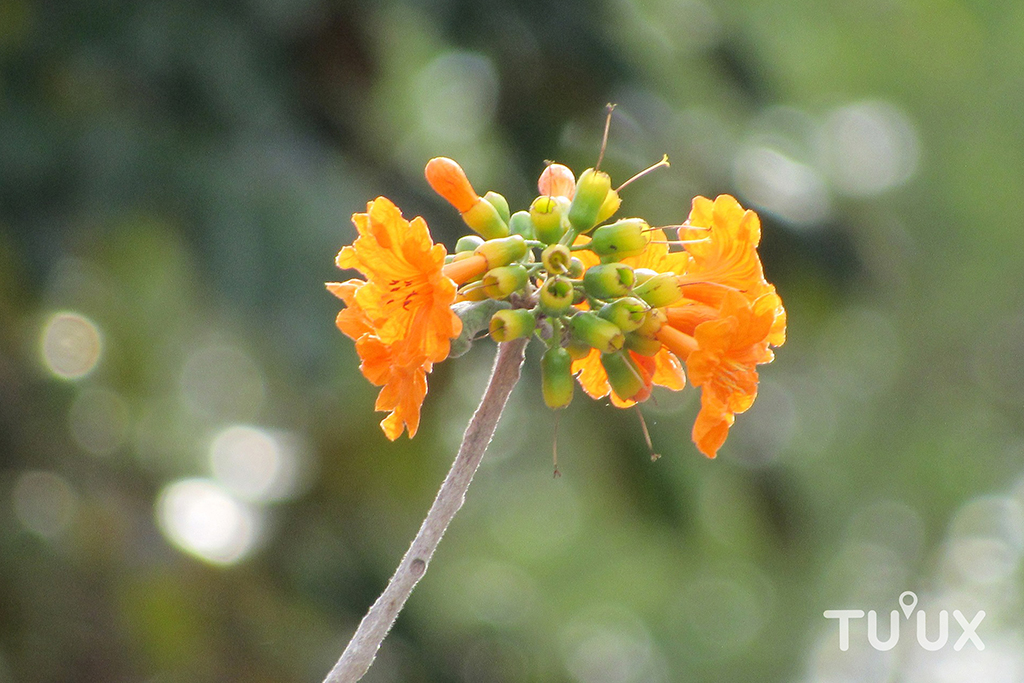
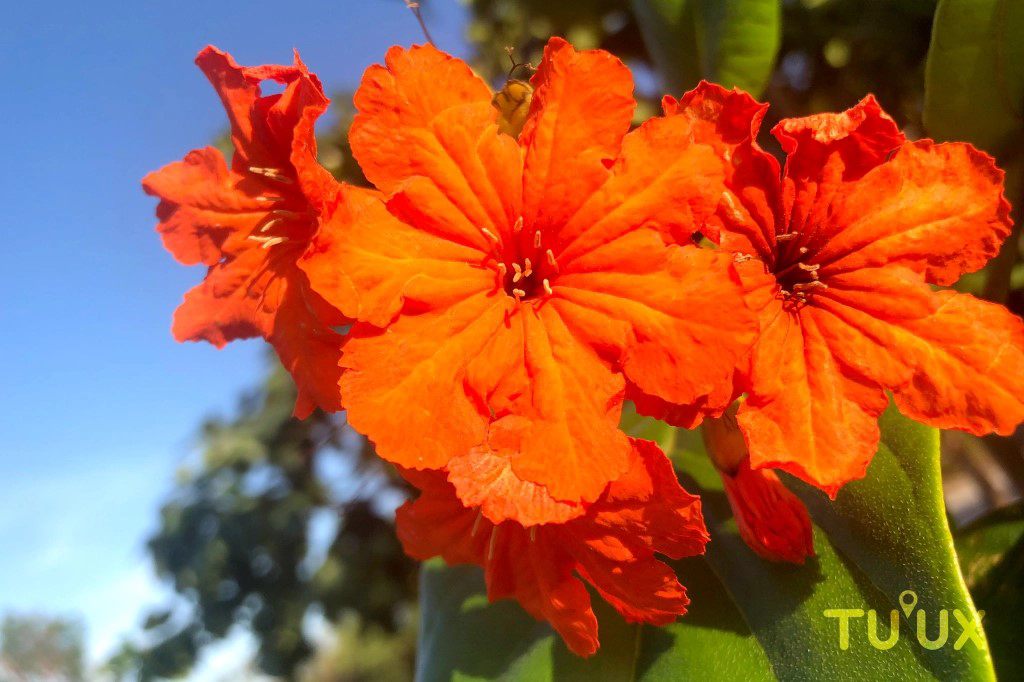
🌸 Flores anaranjadas que transforman la copa
Uno de los rasgos más llamativos del ciricote aparece durante su floración.
Sus flores se agrupan en inflorescencias y presentan tonos que van del amarillo rojizo al anaranjado intenso.
En la Península de Yucatán, la floración suele concentrarse entre finales de la temporada seca y el inicio de las lluvias, aunque la fenología puede variar según localidad y condiciones ambientales.
🌸 Orange flowers that transform the canopy
One of ciricote’s most striking features appears during flowering.
Its flowers are grouped in inflorescences and range from reddish-yellow to intense orange.
In the Yucatán Peninsula, flowering often occurs toward the end of the dry season and around the beginning of the rainy period, although timing can vary by locality and environmental conditions.
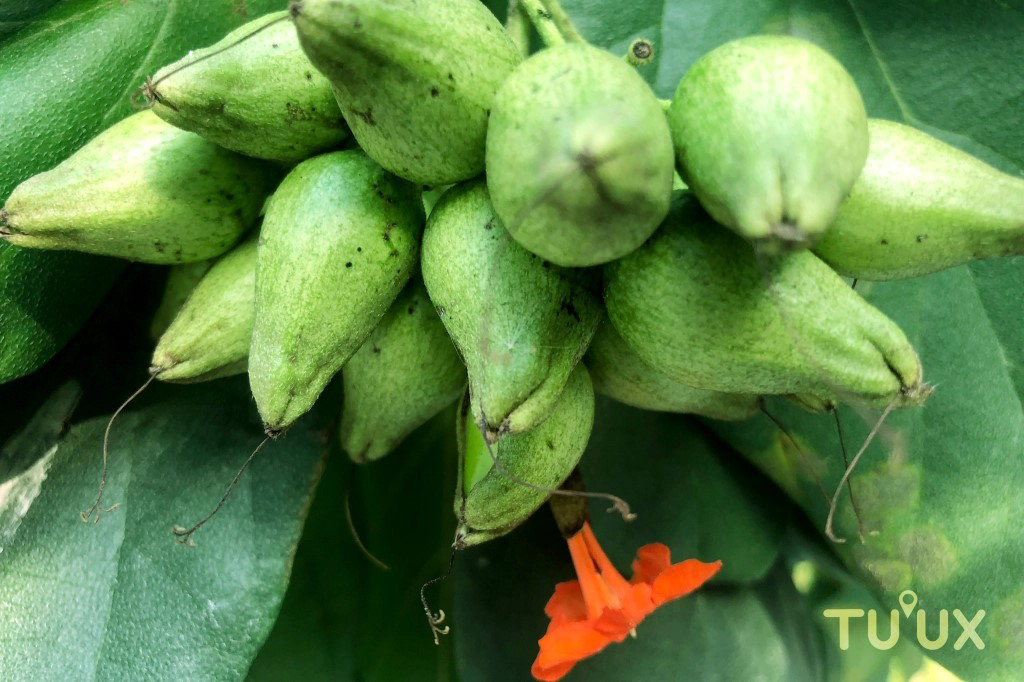
🍈 El fruto del ciricote
Después de la floración se desarrollan frutos carnosos tipo drupa. Al madurar adquieren tonos amarillos.
El fruto es comestible y forma parte de tradiciones gastronómicas del sureste mexicano, especialmente en preparaciones dulces.
- Dulce de ciricote.
- Conservas.
- Preparaciones en almíbar.
- Otros usos domésticos de carácter regional.
🍈 Ciricote fruit
After flowering, the tree develops fleshy drupe fruits. As they ripen, they become yellow.
The fruit is edible and forms part of food traditions in southeastern Mexico, particularly in sweet preparations.
- Ciricote sweets.
- Preserves.
- Fruit prepared in syrup.
- Other regional home preparations.
🪵 Una madera muy apreciada
La madera de ciricote es conocida por su dureza, color oscuro y atractivo veteado.
Tradicionalmente se ha utilizado en trabajos donde el acabado y la apariencia de la madera son especialmente importantes.
🪑 Mobiliario
Utilizada en muebles y trabajos de carpintería fina.
🪵 Ebanistería
Su veta y capacidad de pulido la hacen apreciada para piezas de detalle.
🎨 Artesanías
También se emplea en objetos y piezas decorativas.
🏠 Pisos y acabados
Su dureza permite utilizarla en determinados elementos constructivos y decorativos.
🪵 A highly valued hardwood
Ciricote wood is known for its hardness, dark tones, and attractive grain.
Traditionally, it has been used where finish and the visual quality of wood are especially important.
🪑 Furniture
Used in furniture and fine woodworking.
🪵 Cabinetmaking
Its grain and polished finish make it attractive for detailed work.
🎨 Handcrafts
It is also used for decorative and artisan objects.
🏠 Flooring & finishes
Its hardness allows its use in selected architectural and decorative applications.
🌿 Conocimiento y usos tradicionales
Además del fruto y la madera, diferentes partes del ciricote aparecen registradas en fuentes etnobotánicas y de medicina tradicional de la Península de Yucatán.
Por ejemplo, se ha documentado el uso tradicional de corteza, madera u hojas en preparaciones relacionadas con distintas molestias.
Existe incluso un uso práctico muy particular: las hojas ásperas se han utilizado tradicionalmente para limpiar o pulir jícaras.
🌿 Traditional knowledge and uses
Beyond its fruit and wood, different parts of ciricote appear in ethnobotanical and traditional-medicine sources from the Yucatán Peninsula.
Traditional uses of bark, wood, or leaves have been recorded in preparations associated with various ailments.
There is even a distinctive practical use: its rough leaves have traditionally been used for cleaning or polishing gourds.
🐝 Un árbol integrado al ecosistema
Como cualquier árbol nativo, el ciricote no existe aislado. Su copa, flores, frutos, corteza y ramas forman parte de la estructura del hábitat.
Las flores producen néctar, mientras que el árbol también proporciona sombra, superficies y refugios que pueden ser utilizados por distintos organismos.
🐝 A tree integrated into the ecosystem
Like any native tree, ciricote does not exist in isolation. Its canopy, flowers, fruit, bark, and branches form part of habitat structure.
Its flowers produce nectar, while the tree also provides shade, surfaces, and shelter that may be used by different organisms.
🌱 Conservación y aprovechamiento responsable
La gran calidad de su madera también ha generado presión histórica sobre ejemplares de ciricote.
Estudios realizados en Yucatán señalan que la especie ha sido explotada por su madera y que, al mismo tiempo, continúa cultivándose en huertos familiares, parques y jardines.
- Conservar árboles maduros cuando sea posible.
- Incorporar especies nativas en proyectos de restauración técnicamente adecuados.
- Evitar extracción de madera de procedencia desconocida.
- Priorizar madera con origen legal y manejo responsable.
- Conservar fragmentos de vegetación nativa y su conectividad.
🌱 Conservation and responsible use
The quality of ciricote wood has also created historical pressure on the species.
Research in Yucatán has noted substantial exploitation for timber, while the tree continues to be cultivated in home gardens, parks, and other green spaces.
- Preserve mature trees whenever possible.
- Include appropriate native species in technically planned restoration projects.
- Avoid timber of unknown origin.
- Favor legally sourced and responsibly managed wood.
- Preserve fragments of native vegetation and their connectivity.
🌴 Ciricote y flora nativa en Mahahual
En un destino que crece rápidamente como Mahahual, conocer la flora de Quintana Roo ayuda a tomar mejores decisiones en jardines, áreas verdes y proyectos de restauración.
Las especies nativas pueden formar parte de propuestas de paisajismo mejor conectadas con la vegetación regional, siempre que se seleccione la especie correcta para cada sitio.
🌴 Ciricote and native flora in Mahahual
In a rapidly changing destination such as Mahahual, understanding Quintana Roo’s flora can support better decisions for gardens, green spaces, and restoration projects.
Native species can help create landscapes that are better connected to regional vegetation, as long as the right species is selected for each site.
El ciricote reúne botánica, gastronomía, carpintería, conocimiento tradicional y paisaje en una sola especie.
Su fruto recuerda antiguas recetas; su madera, generaciones de trabajo artesanal; y sus flores anaranjadas, la diversidad de las selvas de la Península de Yucatán.
Conocer los árboles nativos es una de las formas más sencillas de empezar a valorar el paisaje terrestre que existe detrás de las playas de Mahahual.
Ciricote brings together botany, food traditions, woodworking, traditional knowledge, and landscape in a single species.
Its fruit recalls regional recipes; its wood, generations of artisan work; and its orange flowers, the botanical diversity of the Yucatán Peninsula.
Learning about native trees is one of the simplest ways to begin appreciating the terrestrial landscape that exists behind Mahahual’s beaches.
ciricote siricote Cordia dodecandra Quintana Roo Mahahual Península de Yucatán árboles nativos flora de Mahahual Boraginaceae K’oopte ciricote fruit ciricote wood flora Costa Maya árboles Quintana Roo