PÁJARO CARPINTERO
Mahahual · Quintana Roo · Selva Maya · Aves
No solo golpean árboles. Los carpinteros buscan alimento, transmiten mensajes mediante percusión, excavan nidos y construyen cavidades que pueden convertirse en hogares para otros habitantes de la Selva Maya.
Mahahual · Quintana Roo · Maya Forest · Birds
Woodpeckers do far more than hammer trees. They forage, communicate through percussion, excavate nests and create cavities that can become homes for other forest animals.
En Mahahual, a veces escuchas al carpintero antes de encontrarlo.
Un golpe rápido, seco y repetitivo viaja entre palmas, árboles de selva, vegetación secundaria y jardines.
Levantas la mirada y ahí aparece: un ave aferrada verticalmente al tronco, moviéndose con precisión mientras inspecciona la corteza.
Estas aves pertenecen a la familia Picidae, uno de los grupos más especializados entre las aves.
In Mahahual, you may hear a woodpecker before you see it.
A short sequence of rapid impacts travels through palms, tropical trees and secondary vegetation.
Look up and you may find a bird clinging vertically to a trunk, carefully inspecting the bark.
Woodpeckers belong to the family Picidae, one of the most highly specialized groups of birds.
📍 Carpinteros documentados en Mahahual
Una de las mejoras más importantes de esta actualización es separar las especies realmente documentadas en Mahahual de aquellas que pertenecen a la avifauna regional de la Península de Yucatán.
🔶 Carpintero cheje
Melanerpes aurifrons cuenta con registros fotográficos de CONABIO cuya localidad se identifica como Mahahual, Quintana Roo.
🔴 Carpintero lineado
Dryocopus lineatus ha sido registrado en estudios ambientales de Mahahual. Uno de ellos documentó nidos en troncos muertos de palma de coco.
🧬 ¿Qué hace que un carpintero sea un carpintero?
La familia Picidae incluye aves adaptadas para moverse sobre troncos, localizar alimento dentro o debajo de la corteza y excavar madera.
🔨 Pico
Funciona como herramienta de exploración, excavación y percusión.
🧤 Patas zigodáctilas
En muchos carpinteros, dos dedos se orientan hacia adelante y dos hacia atrás, proporcionando agarre sobre superficies verticales.
🪶 Cola rígida
Las plumas centrales de la cola pueden funcionar como apoyo contra el tronco mientras el ave escala.
👅 Lengua especializada
El aparato hioideo permite alcanzar insectos y otros alimentos dentro de grietas y galerías.
🎵 Tamborilear no es lo mismo que buscar comida
Un árbol puede convertirse en instrumento musical
El famoso tamborileo consiste en una serie rápida y estereotipada de golpes utilizada principalmente como señal social.
Puede transmitir información relacionada con territorio, reproducción y reconocimiento entre individuos de la misma especie.
No es exactamente lo mismo que los golpes más lentos utilizados para abrir madera, localizar insectos o excavar una cavidad.
🎵 Drumming is not the same as feeding
Woodpecker drumming is a rapid, stereotyped acoustic signal used in territorial and mating contexts.
It differs from slower pecking used to excavate wood or search for food.
🧠 ¿Por qué no se lastiman la cabeza?
Durante décadas se repitió que el cráneo del carpintero funcionaba como un sofisticado amortiguador que absorbía el impacto.
La investigación biomecánica moderna indica que esa explicación es demasiado simple.
La seguridad del cerebro parece depender de una combinación de tamaño corporal, anatomía, orientación del impacto, musculatura y mecánica del movimiento.
En los experimentos publicados, las cargas estimadas sobre el cerebro permanecieron por debajo de los umbrales de conmoción utilizados como referencia para primates.
🐦 Los carpinteros más importantes para nuestra región
Las listas regionales de la Península de Yucatán incluyen alrededor de once miembros de la familia Picidae, aunque algunos son migratorios, raros o accidentales.
Eso no significa que todos estén presentes regularmente en Mahahual.
🔶 Melanerpes aurifrons
Carpintero cheje / Golden-fronted Woodpecker. Particularmente importante para este artículo porque existen registros directos de CONABIO en Mahahual.
🔴 Dryocopus lineatus
Carpintero lineado. Es uno de los carpinteros grandes y espectaculares de la región. Ha sido documentado directamente en Mahahual.
🟡 Melanerpes pygmaeus
Carpintero yucateco. Es nativo y cuasiendémico de la región de la Península de Yucatán. CONABIO registra su distribución en Quintana Roo.
🪵 Campephilus guatemalensis
Carpintero pico plateado. Gran carpintero forestal documentado en Quintana Roo y en ambientes de la Selva Maya.
🤎 Celeus castaneus
Carpintero castaño. Especie forestal presente regionalmente en la Península de Yucatán.
🫒 Colaptes rubiginosus
Carpintero olivo. Otra especie incluida en listas regionales de la Península de Yucatán.
🐦 Important regional species
Regional checklists for the Yucatán Peninsula contain roughly eleven members of the woodpecker family, although some are rare, accidental or migratory.
Particularly relevant species include Golden-fronted Woodpecker, Lineated Woodpecker, Yucatan Woodpecker, Pale-billed Woodpecker and Chestnut-colored Woodpecker.
This should not be interpreted as evidence that every species regularly occurs in Mahahual itself.
🔎 El reto de identificación: cheje vs. carpintero yucateco
Dos especies de la Península pueden parecerse muchísimo: Melanerpes aurifrons y Melanerpes pygmaeus.
🔶 Carpintero cheje
Generalmente es más grande y posee un pico relativamente más largo.
Las poblaciones de la Península pueden presentar rojo intenso en la nuca y otras zonas de la cabeza.
🟡 Carpintero yucateco
Es más pequeño y de pico relativamente corto.
Las plumas alrededor de la base del pico tienden a ser amarillentas y el patrón dorsal puede verse más plateado.
🧬 Nota taxonómica: el complejo del carpintero frentidorado
La taxonomía de Melanerpes aurifrons es particularmente interesante.
Las poblaciones tropicales han sido tratadas de diferentes maneras por distintas autoridades ornitológicas.
En algunas clasificaciones pueden aparecer dentro del grupo denominado Velasquez’s Woodpecker o relacionadas con el nombre Melanerpes santacruzi.
🐜 ¿Qué comen?
El estereotipo del carpintero comiendo únicamente larvas escondidas dentro de madera tampoco cuenta toda la historia.
Dependiendo de la especie, pueden consumir:
- larvas de escarabajos y otros insectos;
- hormigas;
- artrópodos encontrados sobre corteza;
- frutos;
- semillas;
- savia en especies especializadas;
- y otros recursos vegetales disponibles localmente.
🏠 Los arquitectos de las casas del bosque
Esta probablemente sea la función ecológica más fascinante de los carpinteros.
Muchas especies pueden excavar por sí mismas las cavidades donde anidan.
Cuando posteriormente abandonan esas cavidades, otros animales pueden utilizarlas.
🐦 Otras aves
Algunas especies necesitan cavidades pero no tienen capacidad suficiente para excavarlas.
🦇 Murciélagos
Determinadas cavidades también pueden ofrecer refugio a pequeños mamíferos.
🐝 Invertebrados
Cavidades abandonadas pasan a formar parte de una compleja red ecológica.
🌳 Bosque
Cada hueco aumenta la diversidad estructural disponible dentro del ecosistema.
🏠 Forest architects
Woodpeckers are primary cavity excavators.
Once abandoned, these cavities can become valuable nesting or shelter sites for animals unable to excavate their own.
This is why many woodpeckers can legitimately be described as ecosystem engineers.
🪵 Un árbol muerto puede seguir lleno de vida
Para nosotros, un tronco muerto puede parecer un elemento que debería retirarse.
Para un carpintero, puede representar:
- una fuente de insectos;
- madera apropiada para excavar;
- un sitio para descansar;
- una plataforma para tamborilear;
- o un lugar para establecer una cavidad de anidación.
Eso no significa conservar cualquier árbol peligroso.
En zonas habitadas, seguridad humana y conservación deben equilibrarse. Cuando un tronco no represente riesgo, conservar madera muerta puede aportar un recurso ecológico valioso.
🥚 Cómo construyen un nido
En muchas especies, la pareja participa en diferentes grados en la selección y excavación de la cavidad.
El resultado suele incluir:
- una entrada relativamente pequeña;
- un túnel de acceso;
- y una cámara interna más amplia donde quedan los huevos.
La forma, profundidad, altura y especie de árbol utilizada cambia considerablemente entre especies y regiones.
👀 Cómo observar carpinteros en Mahahual
No necesitas entrar profundamente a la selva para tener un encuentro.
Dependiendo de la especie, pueden utilizar:
- vegetación secundaria;
- bordes de selva;
- palmares;
- zonas arboladas cerca de casas;
- caminos rurales;
- manglares y sus bordes;
- árboles muertos todavía en pie;
- y áreas naturales tierra adentro.
🔭 Observación responsable
🔭 Usa binoculares
Permiten observar detalles de plumaje sin acercarse al ave.
🤫 Reduce el ruido
Escuchar es una parte fundamental de localizar carpinteros.
📱 Evita abusar del playback
Reproducir repetidamente cantos o tamborileos puede provocar respuestas territoriales innecesarias.
🪹 Respeta nidos
Una buena fotografía nunca justifica permanecer demasiado cerca de una cavidad activa.
⚠️ ¿Qué amenaza a los carpinteros?
Las amenazas cambian según la especie, pero varias comparten una necesidad: árboles.
🌳 Pérdida de cobertura
Urbanización, cambio de uso de suelo y desmontes reducen sitios de alimentación y reproducción.
🪵 Eliminación de árboles viejos
Puede reducir cavidades, madera blanda y árboles utilizados para anidar.
🔥 Incendios
Pueden transformar rápidamente la estructura del hábitat.
🧩 Fragmentación
Reduce la continuidad entre parches de vegetación adecuados.
🏠 ¿Por qué un carpintero golpea una casa?
No siempre está intentando destruir la madera.
Puede estar:
- buscando insectos;
- investigando una posible cavidad;
- o utilizando una superficie resonante para tamborilear.
Si existe una cavidad activa con huevos o polluelos, evita sellarla mientras está siendo utilizada.
📷 Galería · Carpinteros
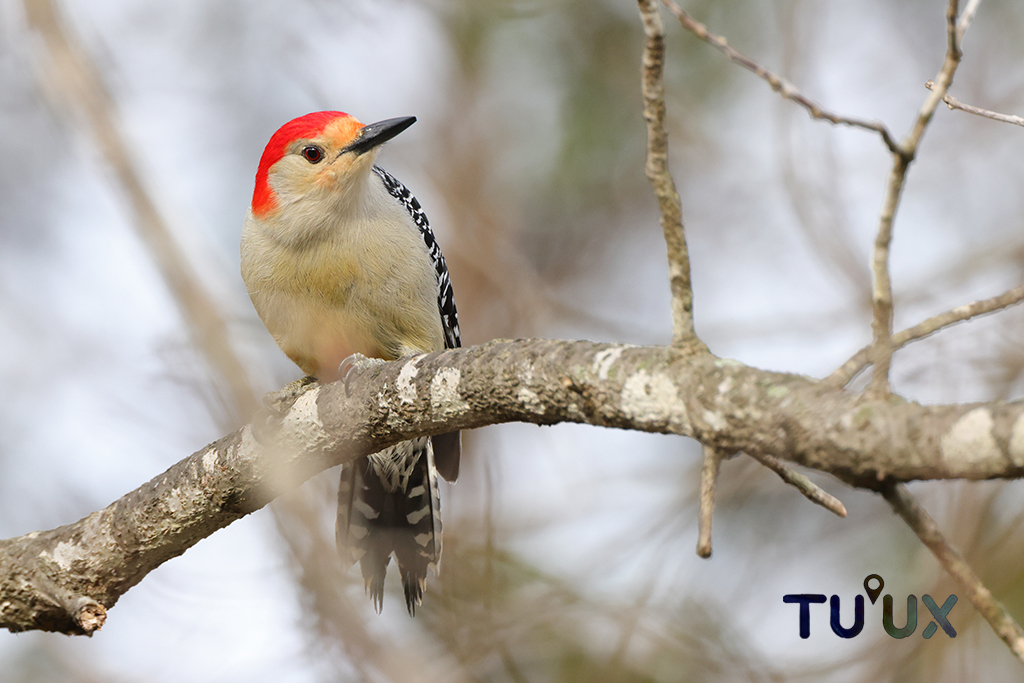
No todos los pájaros carpinteros de estas fotografías representan especies propias de Mahahual. Las imágenes comparativas nos ayudan precisamente a evitar identificaciones incorrectas.
📷 Gallery · Woodpeckers
Not every woodpecker shown below represents a species native to Mahahual. Comparative photographs help illustrate how different members of Picidae can look surprisingly similar.
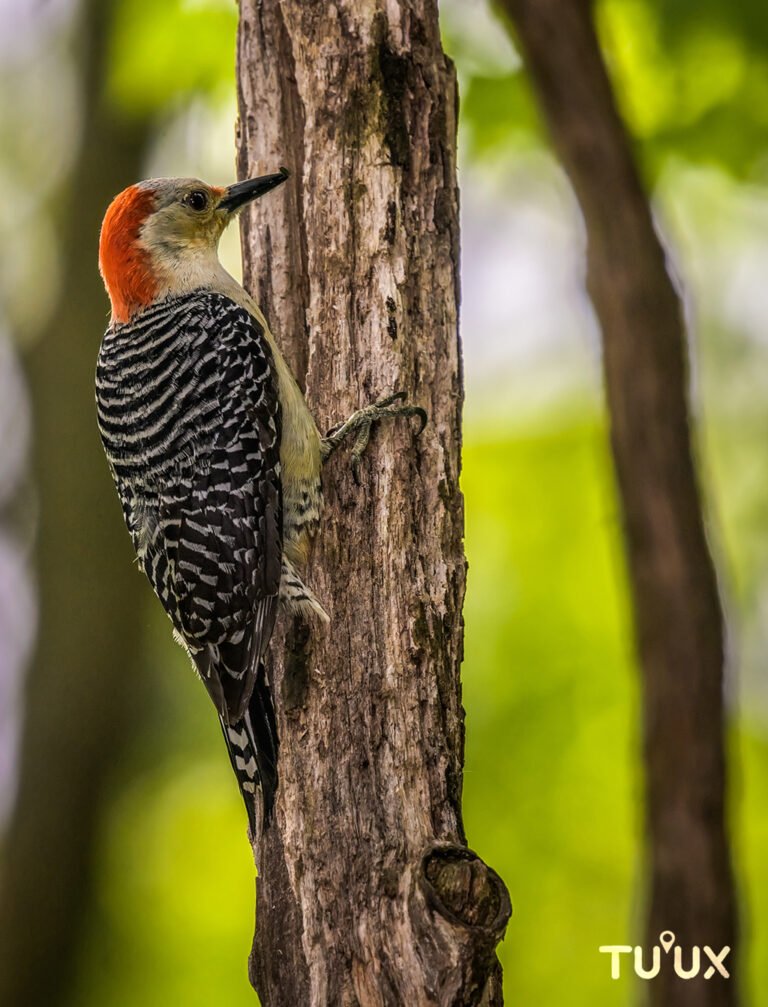
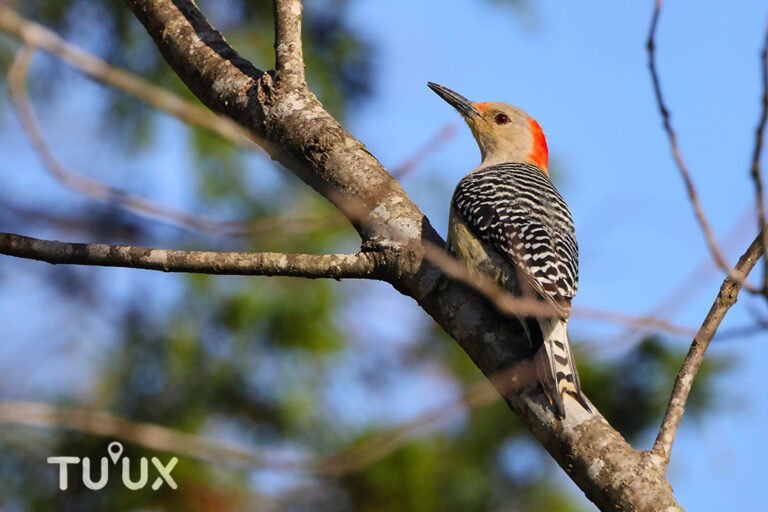
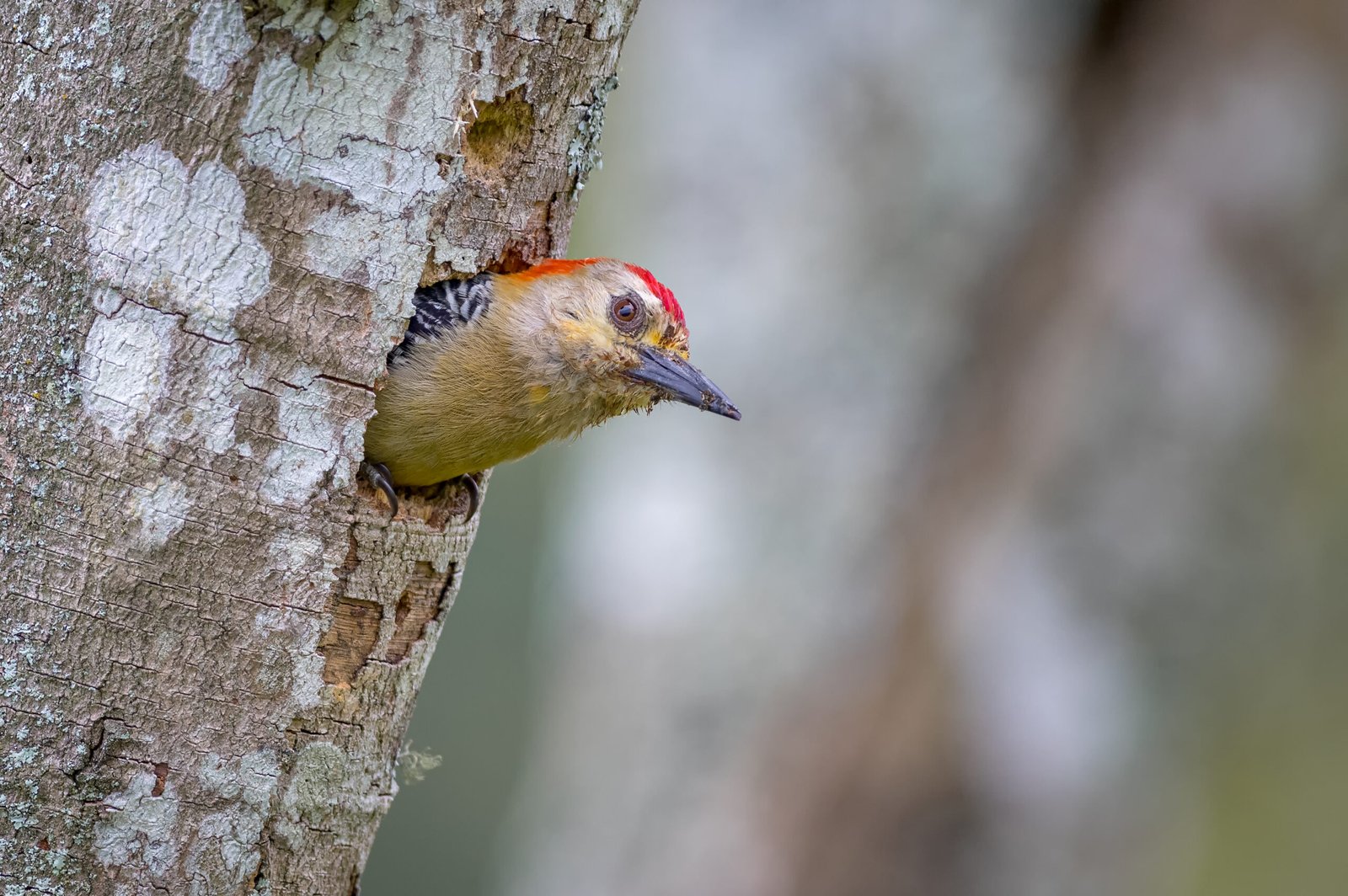
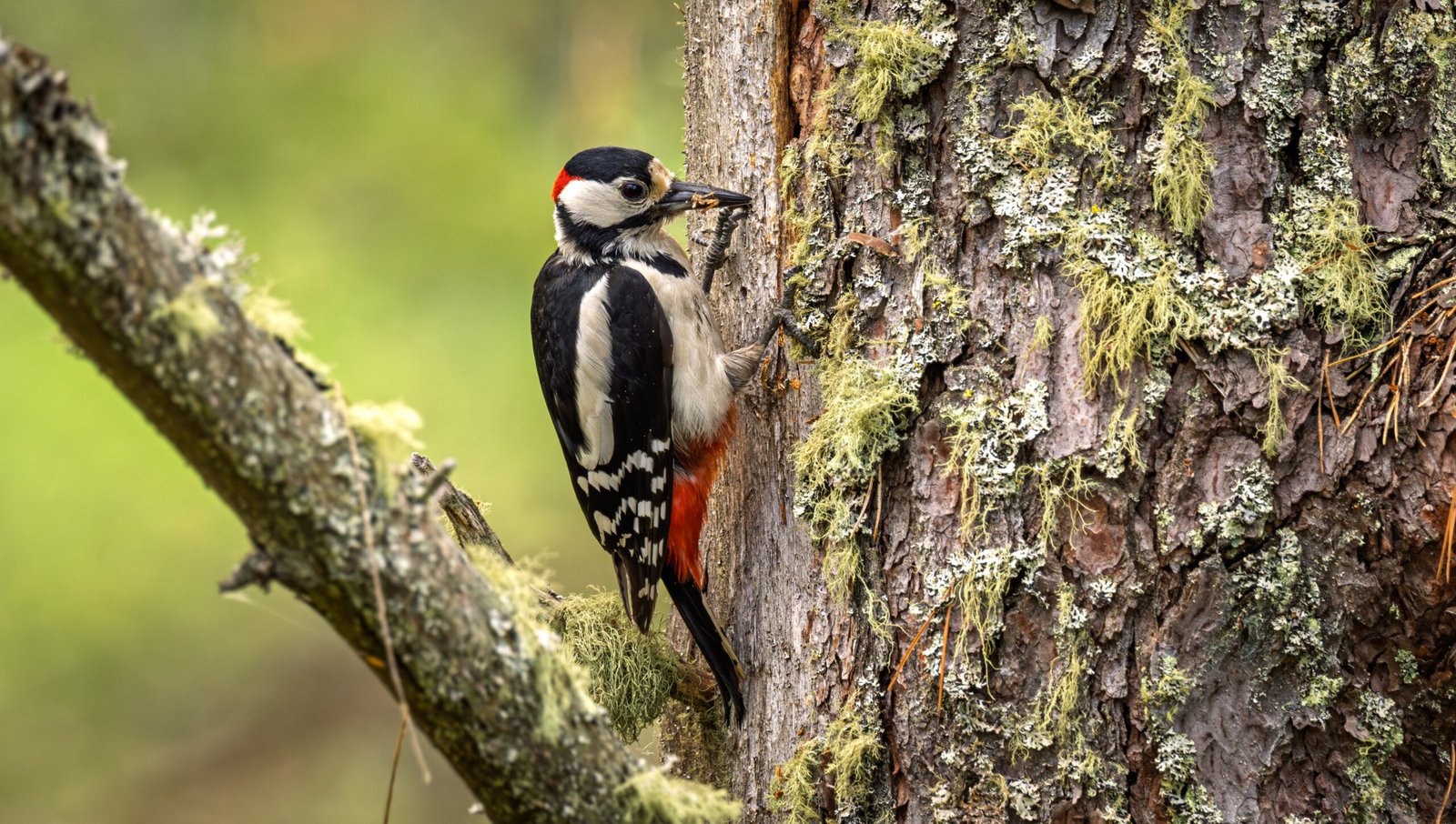
Las dos primeras fotografías son compatibles visualmente con un carpintero del complejo Melanerpes aurifrons de la Península de Yucatán. Las dos fotografías de 2026 se utilizan únicamente como material comparativo y no se atribuyen a la fauna silvestre de Mahahual.
The first two photographs are visually consistent with the Melanerpes aurifrons complex of the Yucatán Peninsula. The two 2026 images are included solely as comparative material and are not presented as Mahahual wildlife records.
❓ Preguntas frecuentes
¿Hay pájaros carpinteros en Mahahual?
Sí. Existen registros de Melanerpes aurifrons asociados directamente con Mahahual, además de documentación local de Dryocopus lineatus.
¿Qué carpintero es común en Mahahual?
El carpintero cheje o frentidorado, Melanerpes aurifrons, cuenta con registros directos de Mahahual en la colección de imágenes de CONABIO.
¿Qué es el carpintero yucateco?
Melanerpes pygmaeus es un pequeño pájaro carpintero nativo y cuasiendémico de la región de la Península de Yucatán. Está registrado en Quintana Roo.
¿Cómo diferencio al carpintero yucateco del cheje?
El carpintero yucateco suele ser más pequeño y de pico más corto. Además, las plumas de la base del pico son amarillentas, mientras las poblaciones locales del cheje muestran diferencias de coloración y un pico proporcionalmente más largo.
¿Por qué los carpinteros golpean los árboles?
Pueden hacerlo para buscar alimento, excavar una cavidad o producir tamborileo. El tamborileo tiene principalmente una función de comunicación.
¿El tamborileo es un canto?
Funcionalmente puede cumplir un papel similar al canto de otras aves, transmitiendo información territorial, reproductiva y de identidad. Sin embargo, se produce mecánicamente golpeando un sustrato con el pico.
¿Por qué no se lastiman al picotear?
Su anatomía y biomecánica están adaptadas al impacto. Estudios recientes indican que el cráneo no funciona simplemente como un amortiguador: la cabeza permanece bastante rígida durante el picoteo.
¿La lengua envuelve el cerebro para protegerlo?
Esa explicación popular es una simplificación. El aparato hioideo participa principalmente en la extraordinaria capacidad de la lengua para alcanzar alimento, mientras la protección durante los impactos depende de múltiples factores biomecánicos.
¿Los carpinteros son importantes para otros animales?
Sí. Las cavidades que excavan pueden ser utilizadas posteriormente por otras aves y animales incapaces de crear huecos similares.
¿Por qué son importantes los árboles muertos?
Pueden proporcionar insectos, madera apropiada para excavación, sitios de descanso, superficies para tamborileo y cavidades para reproducción.
¿Hay carpinteros que aniden en palmas de Mahahual?
Sí existe documentación ambiental local que registró nidos de Dryocopus lineatus en troncos muertos de palma de coco.
¿Por qué golpean objetos metálicos o casas?
Algunas superficies producen un sonido particularmente resonante y pueden utilizarse para tamborileo. En otros casos, el ave puede estar buscando alimento o investigando una posible cavidad.
¿Cuántas especies de carpinteros hay en la Península de Yucatán?
Las listas regionales actuales incluyen alrededor de once miembros de Picidae, aunque algunos son migratorios, raros o accidentales. No todos son habitantes regulares de Mahahual.
¿El carpintero cara negra es común en Mahahual?
No debe presentarse como una especie característica de Mahahual. Las listas regionales de la Península de Yucatán lo consideran raro o accidental.
¿Cómo puedo ayudar a conservarlos?
Conserva árboles y vegetación nativa, respeta cavidades activas, evita eliminar madera muerta cuando no represente un riesgo, limita pesticidas innecesarios y practica observación responsable.
❓ Frequently asked questions
Are woodpeckers found in Mahahual?
Yes. Golden-fronted Woodpecker records are directly associated with Mahahual, and local environmental studies have also documented Lineated Woodpeckers.
Why do woodpeckers drum?
Drumming is primarily an acoustic communication signal associated with territorial and reproductive behavior.
Does the skull absorb the impact?
Modern biomechanical research indicates that a woodpecker’s head remains relatively rigid during impact rather than acting simply as a shock absorber.
Why are woodpeckers ecosystem engineers?
Their excavated cavities can later provide nesting and shelter sites for birds and other animals that cannot excavate similar cavities themselves.
What is the Yucatan Woodpecker?
Melanerpes pygmaeus is a small woodpecker native to the Yucatán Peninsula region and is recorded in Quintana Roo.
📚 Fuentes científicas y oficiales
- CONABIO · Banco de Imágenes de la Biodiversidad — registros de Melanerpes aurifrons en Mahahual, Quintana Roo.
- CONABIO · EncicloVida — Melanerpes aurifrons, Melanerpes pygmaeus, Dryocopus lineatus, Campephilus guatemalensis y Celeus castaneus.
- SEMARNAT · Manifestaciones de Impacto Ambiental de Mahahual — registros locales de Dryocopus lineatus y nidos en palmas muertas.
- Programa de Desarrollo Urbano del Centro de Población de Mahahual — fauna regional y especies asociadas con Sian Ka’an.
- Avibase / eBird regional checklist — Picidae de la Península de Yucatán y estatus regional de especies raras.
- Cornell Lab of Ornithology — Golden-fronted Woodpecker, identificación, comportamiento y variación regional.
- Current Biology · “Woodpeckers minimize cranial absorption of shocks” — biomecánica del impacto durante el picoteo.
- Nature Communications · “Evolution of communication signals and information during species radiation” — función comunicativa del tamborileo.
- Ecology and Evolution · “Secondhand homes: The multilayered influence of woodpeckers as ecosystem engineers” — importancia ecológica de cavidades abandonadas.
- CONABIO · Lista actualizada de aves de México — taxonomía y distribución regional.
📚 Scientific and official sources
- CONABIO Biodiversity Image Bank — Golden-fronted Woodpecker records from Mahahual.
- CONABIO EncicloVida — taxonomy and distribution of regional woodpeckers.
- SEMARNAT environmental studies — Lineated Woodpecker records in Mahahual.
- Cornell Lab of Ornithology — regional woodpecker identification and taxonomy.
- Current Biology — biomechanics of woodpecker impacts.
- Nature Communications — evolution and communication function of drumming.
- Ecology and Evolution — woodpeckers as ecosystem engineers.
Un carpintero golpeando un árbol puede parecer una escena sencilla.
Pero detrás de cada golpe puede haber comunicación, búsqueda de alimento, excavación o la construcción de un futuro hogar.
Y esa cavidad, después de ser abandonada, puede comenzar una segunda vida para otra especie.
En Mahahual, donde selva, palmas, manglares y desarrollo humano se encuentran a pocos metros unos de otros, conservar estos árboles significa proteger mucho más que a un solo pájaro.
Cuando escuchamos el tamborileo de un carpintero, estamos escuchando una de las herramientas más antiguas de ingeniería y comunicación del bosque.
A woodpecker hammering a tree may seem like a simple scene.
Yet each strike may represent communication, feeding, excavation or construction of a future home.
Once abandoned, that cavity may begin a second life for another animal.
Hearing a woodpecker in Mahahual means hearing one of the forest’s oldest systems of engineering and communication.