CORALILLO
Mahahual · Caribe Mexicano · Fauna silvestre · Convivencia responsable
Las serpientes coralillo del género Micrurus forman parte de la biodiversidad del sureste de México. Su coloración puede ser espectacular, pero su identificación no debe hacerse mediante rimas ni reglas simples: si no sabes qué especie es, mantén distancia y no la manipules.
Mahahual · Mexican Caribbean · Wildlife · Responsible coexistence
Coral snakes of the genus Micrurus are part of southeastern Mexico’s biodiversity. Their coloration can be striking, but identification should never rely on rhymes or simple color rules: if you are unsure what species it is, keep your distance and do not handle it.
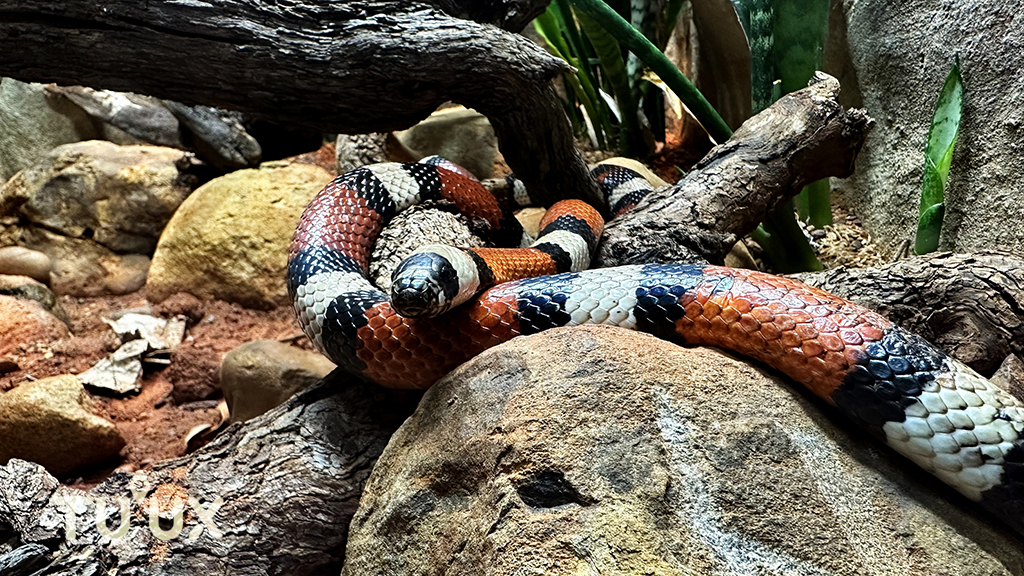
Entre la hojarasca, raíces, troncos y vegetación tropical del Caribe mexicano viven serpientes que muchas veces pasan inadvertidas. Entre ellas se encuentran las coralillos verdaderas, pertenecientes al género Micrurus.
Son animales discretos que generalmente intentan evitar el contacto con las personas. Aun así, poseen veneno de importancia médica y una posible mordedura debe tratarse como una emergencia.
No intentes tocar, capturar, mover o acercarte demasiado a una serpiente silvestre para identificarla o fotografiarla. Retrocede con calma y dale una vía de escape.
Leaf litter, roots, fallen logs, and tropical vegetation in the Mexican Caribbean provide shelter for snakes that often go unnoticed. Among them are true coral snakes of the genus Micrurus.
They are discreet animals that generally try to avoid people. Even so, their venom is medically significant, and a suspected bite should be treated as an emergency.
Never touch, capture, move, or approach a wild snake closely simply to identify or photograph it. Back away calmly and give it an escape route.
🔬 Una precisión importante para Mahahual
Durante años, distintas poblaciones de coralillos del sureste fueron agrupadas bajo nombres taxonómicos que posteriormente han sido revisados.
Micrurus diastema continúa siendo una especie válida y CONABIO la registra como serpiente coralillo del sureste . Sin embargo, revisiones modernas también reconocen a Micrurus apiatus para poblaciones de la península de Yucatán.
No conviene afirmar que cualquier serpiente anillada observada en Quintana Roo es automáticamente Micrurus diastema. La identificación a nivel de especie requiere evidencia adecuada y, cuando sea necesario, revisión de especialistas.
🔬 An important note for Mahahual
For many years, southeastern coral snake populations were grouped under taxonomic names that have since been revised.
Micrurus diastema remains a valid species. Modern taxonomic work also recognizes Micrurus apiatus for populations in the Yucatán Peninsula.
A banded snake observed in Quintana Roo should not automatically be identified as Micrurus diastema. Species-level identification requires suitable evidence and, when necessary, expert review.
🌿 ¿Qué es una coralillo verdadera?
Las coralillos verdaderas pertenecen a la familia Elapidae, el mismo gran grupo zoológico que incluye cobras, mambas y otras serpientes cuyos venenos pueden afectar el sistema nervioso.
🌿 What is a true coral snake?
True coral snakes belong to the family Elapidae, the same broad zoological group that includes cobras, mambas, and other snakes whose venoms can affect the nervous system.
🔍 Características generales
🐍 Cuerpo delgado
Generalmente presentan un cuerpo esbelto y cilíndrico, adecuado para moverse entre hojarasca, suelo y refugios estrechos.
🧠 Cabeza poco diferenciada
La cabeza puede verse poco separada del cuello. La forma de la cabeza no es un método seguro para determinar si una serpiente es venenosa.
🎨 Coloración contrastante
Muchas especies presentan bandas rojas, negras, amarillas o claras. El patrón exacto puede variar entre especies e individuos.
🌿 Conducta discreta
Suelen utilizar hojarasca, suelo, troncos y otros refugios. Un encuentro no significa que el animal esté buscando atacar.
🔍 General characteristics
🐍 Slender body
Coral snakes generally have slender, cylindrical bodies suited for moving through leaf litter, soil, and narrow shelters.
🧠 Subtle head shape
The head may appear only slightly distinct from the neck. Head shape is not a safe way to decide whether a snake is venomous.
🎨 Contrasting coloration
Many species show red, black, yellow, or pale bands. Exact patterns vary among species and individuals.
🌿 Discreet behavior
They often use leaf litter, soil, logs, and other shelters. An encounter does not mean the animal is seeking to attack.
📸 Patrones que pueden confundirse
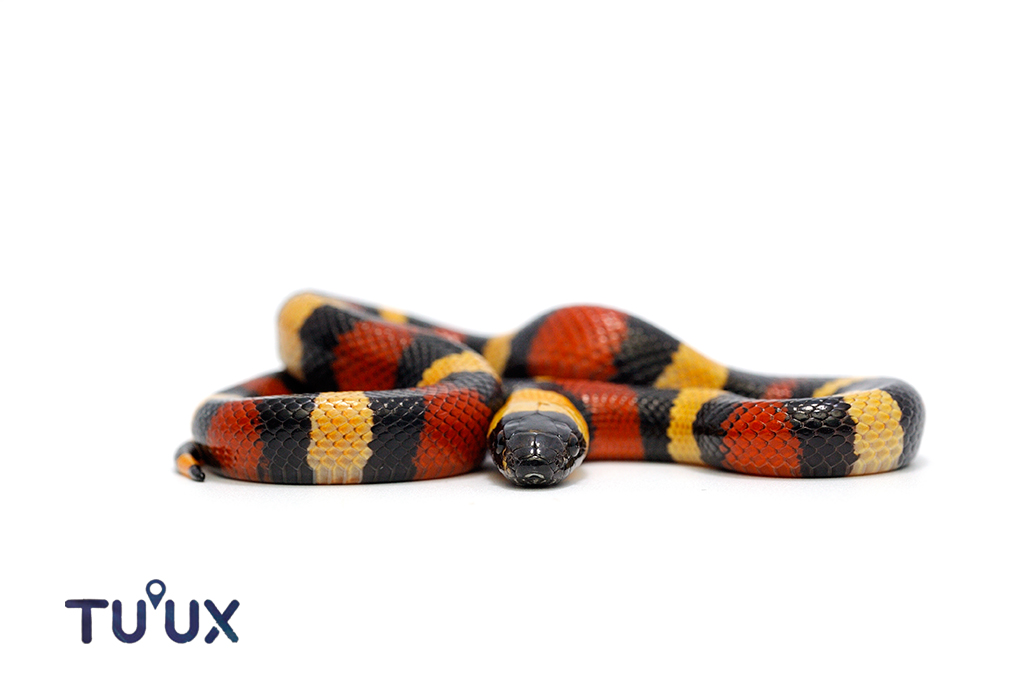
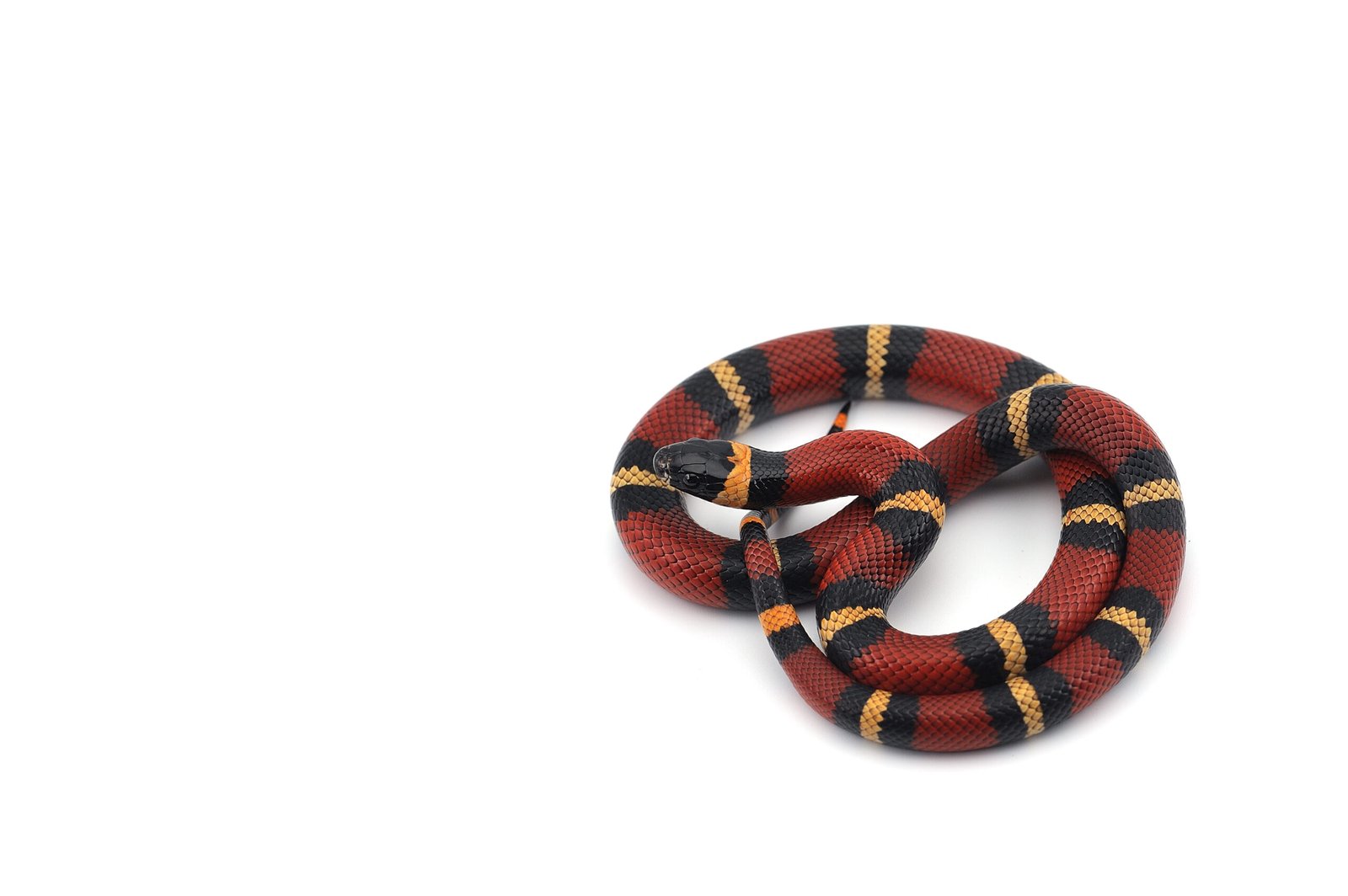
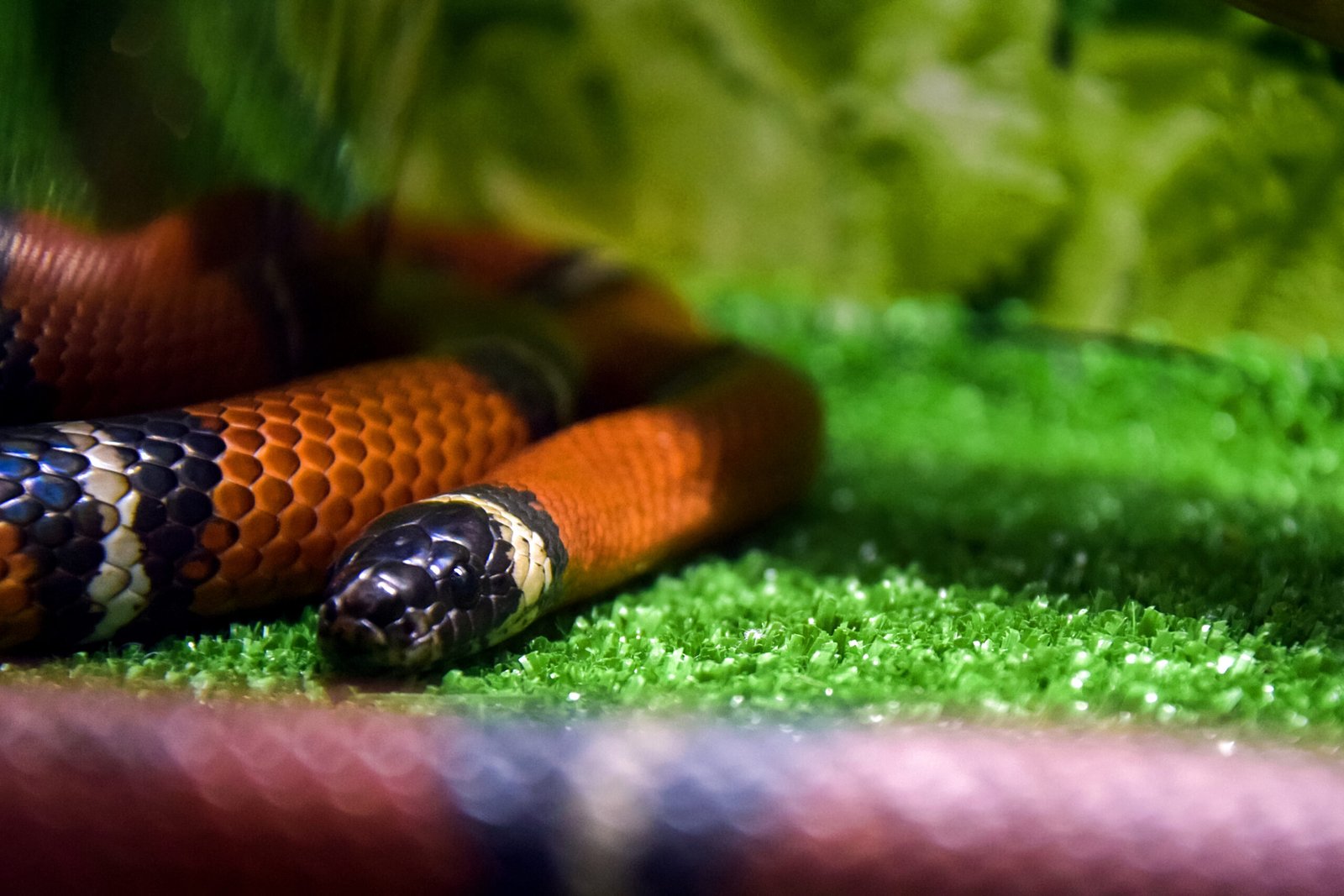
Estas imágenes funcionan como referencia visual, no como una guía definitiva para identificar especies. La variación natural y la existencia de serpientes imitadoras hacen inseguro decidir únicamente por el color.
📸 Patterns can be confusing
These photographs are visual references, not a definitive species-identification guide. Natural variation and mimic species make color-only identification unreliable.
⚠️ La famosa “rima de los colores” no es una regla segura
Es común encontrar frases populares que relacionan el orden de los colores rojo, amarillo y negro con si una serpiente es venenosa o no.
Estas reglas no son suficientemente confiables para México ni Centroamérica . Existen especies con patrones variables y otras serpientes que imitan a las coralillos.
si no puedes identificarla con certeza, mantén distancia y no la manipules.
⚠️ The famous color rhyme is not a safe rule
Popular sayings linking band order to whether a snake is venomous are not reliable enough for Mexico or Central America .
Natural variation and mimic species can produce dangerously confusing patterns.
if you cannot identify it with certainty, keep your distance and do not handle it.
🐍 ¿Y las llamadas “falsas coralillo”?
Varias serpientes que no pertenecen al género Micrurus pueden presentar bandas o colores similares.
Este parecido puede tener una función defensiva, pero para una persona sin experiencia puede hacer muy difícil una identificación visual.
Si está en libertad y no existe una emergencia inmediata, aléjate y permite que continúe su camino.
🐍 What about “false coral snakes”?
Several snakes outside the genus Micrurus may display bands or colors similar to true coral snakes.
This resemblance may serve a defensive purpose, but it can also make visual identification difficult for an inexperienced observer.
If the snake is free-ranging and there is no immediate emergency, keep your distance and allow it to move away.
🏞️ Hábitat y distribución
Micrurus diastema está reportada en el sur de México y partes de Centroamérica. Las revisiones taxonómicas modernas distinguen además a Micrurus apiatus en áreas de la península de Yucatán.
Las coralillos pueden utilizar distintos ambientes terrestres que les proporcionan cobertura, refugio y disponibilidad de presas.
- Hojarasca y suelo de selva.
- Debajo de troncos, raíces y refugios naturales.
- Vegetación secundaria y zonas rurales.
- Bordes de caminos próximos a vegetación.
- Sitios con cobertura, humedad y disponibilidad de alimento.
En Mahahual, cuando no existe una identificación confirmada, es más responsable hablar de una “serpiente con patrón coralillo” que asignarle automáticamente una especie.
🏞️ Habitat and distribution
Micrurus diastema is reported from southern Mexico and parts of Central America. Modern taxonomic work also recognizes Micrurus apiatus in areas of the Yucatán Peninsula.
Coral snakes may use different terrestrial environments providing cover, shelter, and available prey.
- Forest floor and leaf litter.
- Beneath logs, roots, and natural shelters.
- Secondary vegetation and rural landscapes.
- Road edges next to vegetation.
- Sites with cover, moisture, and available prey.
In Mahahual, when species identification has not been confirmed, describing the animal as a “snake with a coral-like pattern” is more responsible than automatically assigning a species.
🌱 Su papel en el ecosistema
Las coralillos forman parte de las redes alimentarias de los ecosistemas tropicales. Pueden consumir pequeños vertebrados, incluidos otros reptiles, y también formar parte de la dieta de otros animales.
- Son depredadoras: participan en la dinámica natural de sus presas.
- También pueden ser presas: forman parte de una red ecológica mucho más amplia.
- Son biodiversidad nativa: eliminarlas por miedo retira innecesariamente fauna del ecosistema.
🌱 Their ecological role
Coral snakes form part of tropical food webs. They may consume small vertebrates, including other reptiles, while also serving as prey for other animals.
- They are predators: contributing to natural prey dynamics.
- They can also be prey: forming part of a wider ecological network.
- They are native biodiversity: killing them out of fear unnecessarily removes wildlife from the ecosystem.
✅ Qué hacer si encuentras una serpiente
- No la toques.
- No intentes atraparla, levantarla o sujetarla con herramientas.
- Retrocede lentamente y permite que tenga una vía de escape.
- Mantén alejados a niños y mascotas.
- No metas las manos en troncos, huecos, rocas o vegetación que no puedas ver bien.
- Si está dentro de una vivienda o en una zona de riesgo, solicita ayuda a personal capacitado para manejo de fauna.
✅ What to do if you encounter a snake
- Do not touch it.
- Do not try to catch, pick up, or restrain it with tools.
- Back away slowly and give it an escape route.
- Keep children and pets away.
- Never place your hands into logs, holes, rocks, or vegetation you cannot clearly see.
- If it is inside a home or another high-risk area, contact trained wildlife personnel.
🚑 Qué hacer ante una posible mordedura
No esperes a que aparezcan síntomas para buscar ayuda.
- Aléjate de la serpiente para evitar una segunda mordedura.
- Mantén a la persona lo más quieta y tranquila posible.
- Evita movimientos innecesarios y trasládala cuanto antes a un servicio médico.
- Retira anillos, pulseras, relojes o prendas ajustadas.
- No intentes capturar o matar a la serpiente para llevarla al hospital.
- No uses torniquetes.
- No cortes la herida.
- No intentes succionar el veneno.
- No apliques químicos ni remedios caseros.
El tratamiento específico debe decidirlo personal de salud y puede incluir antiveneno y soporte respiratorio cuando exista envenenamiento.
🚑 What to do after a suspected bite
Do not wait for symptoms before seeking care.
- Move away from the snake to prevent another bite.
- Keep the person as still and calm as possible.
- Avoid unnecessary movement and transport the person to medical care as soon as possible.
- Remove rings, bracelets, watches, and tight clothing.
- Do not try to capture or kill the snake for hospital identification.
- Apply a tourniquet.
- Cut the wound.
- Attempt to suck out venom.
- Apply chemicals or home remedies.
Treatment must be determined by medical professionals and may include antivenom and respiratory support when envenoming occurs.
❓ Preguntas frecuentes
¿Todas las serpientes rojas, negras y amarillas son coralillos verdaderas?
¿Puedo usar la rima “rojo con amarillo” para identificarlas?
¿Una coralillo va a perseguirme?
¿Qué hago si aparece una dentro de una casa?
¿Debo llevar la serpiente al hospital si hubo mordedura?
❓ Frequently asked questions
Are all red, black, and yellow snakes true coral snakes?
Can I use a color rhyme to identify them?
Will a coral snake chase me?
What should I do if one enters a house?
Should I bring the snake to the hospital after a bite?
- CONABIO · EncicloVida — ficha de Micrurus diastema.
- The Reptile Database — distribución y tratamiento taxonómico de Micrurus diastema y Micrurus apiatus.
- Organización Mundial de la Salud — recomendaciones generales sobre mordeduras de serpiente, primeros auxilios y tratamiento.
- CONABIO · EncicloVida — Micrurus diastema species profile.
- The Reptile Database — distribution and taxonomic treatment of Micrurus diastema and Micrurus apiatus.
- World Health Organization — general snakebite first-aid and treatment guidance.
Una coralillo no necesita ser tocada ni capturada para ser apreciada. Mantener distancia, respetar su espacio y pedir ayuda profesional cuando aparece en un sitio de riesgo protege tanto a las personas como a la serpiente.
En la selva de Mahahual, observar responsablemente también significa saber cuándo no intervenir.
A coral snake does not need to be touched or captured to be appreciated. Keeping your distance, respecting its space, and requesting professional help when one appears in a risky location protects both people and the snake.
In Mahahual’s tropical environment, observing responsibly also means knowing when not to intervene.
coralillo Mahahual coral snake Quintana Roo Micrurus Micrurus diastema Micrurus apiatus Elapidae serpientes venenosas Caribe mexicano falsa coralillo seguridad con serpientes mordedura de serpiente biodiversidad Mahahual