RANA
Mahahual · Bacalar · Xcalak · Sian Ka’an · Selva & Humedales
🐸 Ranas del Caribe Mexicano: Voces Escondidas de la Selva Tropical
Un viaje nocturno por humedales, manglares y selvas bajas: por qué las ranas importan, cómo reconocerlas y cómo observarlas sin dañarlas.
Mahahual · Bacalar · Xcalak · Sian Ka’an · Jungle & Wetlands
🐸 Frogs of the Mexican Caribbean: Hidden Voices of the Tropical Jungle
A night-time journey through wetlands, mangroves, and low jungle: why frogs matter, how to recognize them, and how to watch without harm.
Cuando cae la noche en el Caribe mexicano, la selva “cambia de turno”. Sube la humedad, los insectos se activan y, entre raíces, hojas y charcas, aparece un coro antiguo que no se ve… se escucha.
Las ranas —discretas, esenciales y sorprendentemente diversas— salen a cantar como si la selva afinara su propia orquesta. En regiones como Mahahual, Bacalar, Xcalak y Sian Ka’an, los anfibios no son solo “sonido nocturno”: son el pulso de los humedales.
When night falls in the Mexican Caribbean, the jungle “switches shifts.” Humidity rises, insects take off, and among roots, leaves, and shallow pools, an ancient chorus begins—one you don’t see… you hear.
Frogs—discreet, essential, and surprisingly diverse—sing as if the jungle were tuning its own orchestra. In places like Mahahual, Bacalar, Xcalak, and Sian Ka’an, amphibians aren’t just “night sound”: they’re wetland heartbeat.
🌿 ¿Por qué importan tanto las ranas?
Son bioindicadoras de primera línea. Su piel permeable funciona como una “ventana” al ambiente: cualquier cambio en químicos, contaminación, temperatura o sequías puede afectarles rápidamente.
- Control de insectos: consumen mosquitos y otros invertebrados (control biológico natural).
- Eslabón vital: alimentan a aves, serpientes, lagartijas y mamíferos pequeños.
- Energía en movimiento: convierten insectos en biomasa disponible para depredadores.
Si en una zona “se apaga el coro”, suele ser una señal ecológica importante.
🌿 Why frogs matter so much
They’re frontline bioindicators. Their permeable skin acts like an environmental “window”: changes in chemicals, pollution, temperature, or drought can impact them fast.
- Insect control: they eat mosquitoes and other invertebrates (natural biological control).
- Key food link: they feed birds, snakes, lizards, and small mammals.
- Energy transfer: they turn insects into biomass for predators.
When the “chorus goes quiet,” it’s often an ecological warning sign.
🐸 Las voces del Caribe: especies comunes
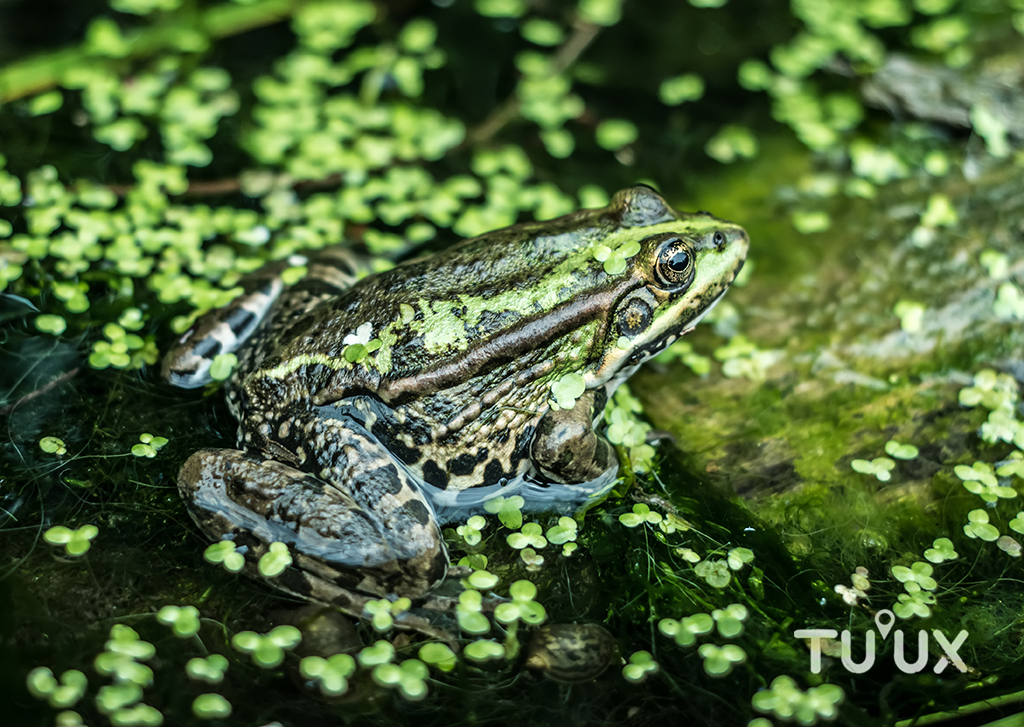
🐆 Rana leopardo — Lithobates berlandieri
Orillas de lagunas, cenotes y manglares. Verde/café con manchas oscuras. Salto explosivo para escapar.
🌳 Rana arborícola — Scinax staufferi
Arbustos y jardines húmedos. Dedos adhesivos; suele verse tras lluvias, “pegada” a hojas o superficies.
🍂 Rana de hojarasca — Craugastor loki
Suelo de selva. Camuflaje de hoja seca. Desarrollo directo: no pasa por renacuajo.
🐂 Rana toro centroamericana — Lithobates vaillanti
Lagunas y pantanos con vegetación densa. Croar grave y potente; marca territorio y se oye lejos.
🍃 Ranas verdes de árbol — Hyla spp. (y afines)
Vegetación cerca del agua. Verde brillante; muchas se detectan más por el canto que por la vista.
🐸 Caribbean voices: common species
🐆 Leopard frog — Lithobates berlandieri
Lagoon/cenote edges and mangroves. Green/tan with dark spots. Explosive jumps to escape.
🌳 Tree frog — Scinax staufferi
Wet shrubs and gardens. Sticky toe pads; often seen after rain “stuck” to leaves or surfaces.
🍂 Leaf-litter frog — Craugastor loki
Jungle floor. Leaf-like camouflage. Direct development: no tadpole stage.
🐂 Central American bullfrog — Lithobates vaillanti
Vegetated lagoons and swamps. Deep, powerful call; territorial and heard from far away.
🍃 Green tree frogs — Hyla spp. (and relatives)
Vegetation near water. Bright green; many are easier to detect by call than by sight.
⏳ ¿Cuándo es mejor escucharlas?
La mejor temporada suele ser mayo a octubre (lluvias). Calor + humedad + charcas temporales activan el ciclo reproductivo… y el coro.
- Mejor horario: 7:00 pm – 1:00 am (aprox.)
- Mejor clima: noche húmeda, después de lluvia ligera o con llovizna
⏳ Best time to hear them
The best season is usually May to October (rainy months). Heat + humidity + temporary pools trigger breeding… and the chorus.
- Best hours: ~7:00 pm – 1:00 am
- Best weather: humid night, after light rain or drizzle
🛡️ Amenazas y conservación
- Deforestación y fragmentación del hábitat
- Pesticidas y químicos que afectan su piel
- Urbanización y contaminación lumínica/sonora
- Sequías y cambios en el ciclo de lluvias
Sitios protegidos como Sian Ka’an y zonas de humedal/manglar conservadas mantienen “coros” más fuertes.
🛡️ Threats & conservation
- Deforestation and habitat fragmentation
- Pesticides and chemicals affecting their skin
- Urbanization plus light/noise pollution
- Drought and altered rainfall cycles
Protected areas like Sian Ka’an and well-preserved wetlands help keep frog populations—and choruses—strong.
📸 Consejos para observar ranas (sin dañarlas)
- Linterna con luz cálida/ámbar o modo rojo (menos estrés).
- Camina en silencio y escucha: el sonido te guía.
- No las toques: su piel es delicada y absorbe sustancias.
- Evita flash directo; usa luz suave lateral si haces fotos.
- Respeta charcas y vegetación: huevos/renacuajos son invisibles a simple vista.
📸 How to watch frogs (without harming them)
- Use a warm/amber light or red mode (less stress).
- Walk quietly and listen—the calls guide you.
- Don’t touch: their skin is delicate and absorbs substances.
- Avoid direct flash; use soft side light for photos.
- Respect pools and plants: eggs/tadpoles can be hard to see.
Escuchar ranas es escuchar el ecosistema funcionando. La selva no duerme: respira, se comunica y se sostiene… nota por nota.
🔁 Comparte este artículoComparte para promover observación responsable y conservación de humedales.
Listening to frogs is listening to an ecosystem at work. The jungle doesn’t sleep—it breathes, speaks, and holds itself together… note by note.
🔁 Share this articleShare to promote responsible wildlife watching and wetland conservation.
Ranas del Caribe Mexicano Mahahual Bacalar Xcalak Sian Ka’an humedales manglares bioindicadores observación nocturna conservación anfibios.