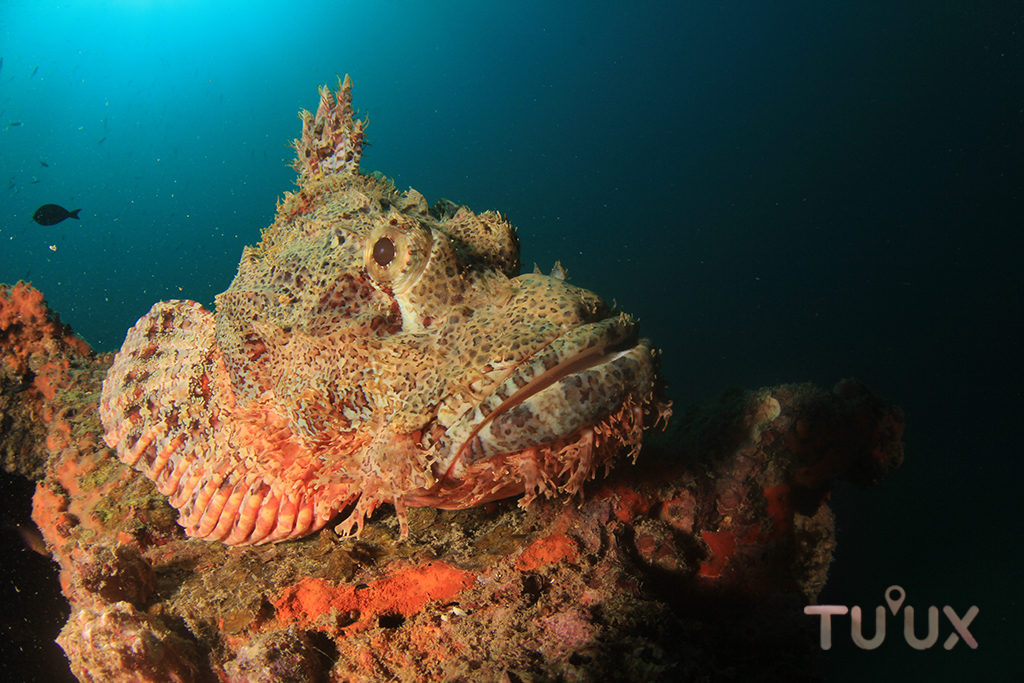
PEZ PIEDRA
Caribe Mexicano · Mahahual · Arrecife · Fauna marina
👻🐟 El Fantasma del Arrecife: Pez Piedra, el Maestro del Camuflaje y el Peligro Invisible
Una guía clara sobre el pez piedra: cómo se camufla, por qué es tan peligroso, qué especies se confunden con él en el Caribe mexicano y qué hacer ante una lesión por espinas venenosas.
Mexican Caribbean · Mahahual · Reef · Marine wildlife
👻🐟 The Reef’s Ghost: Stonefish, Master of Camouflage and an Invisible Hazard
A practical guide to stonefish: how it blends in, why it’s so dangerous, which look-alike species occur in the Mexican Caribbean, and what to do after a venomous spine injury.
Si hay una regla de oro en el océano, es esta: no todo es lo que parece. Y ninguna criatura encarna mejor esta advertencia que el pez piedra. Fascinante para los biólogos y temido por bañistas, buzos y snorkelistas, este animal no necesita velocidad ni fuerza bruta: su arma es la paciencia.
Inmóvil, mimetizado con el fondo marino, ostenta un título inquietante: es considerado el pez más venenoso del mundo.
If there’s a golden rule in the ocean, it’s this: not everything is what it seems. No creature embodies that warning better than the stonefish. Fascinating to biologists and feared by swimmers, divers, and snorkelers, it doesn’t rely on speed or brute force—its weapon is patience.
Motionless and perfectly blended into the seafloor, it carries an unsettling reputation: it’s often described as the most venomous fish in the world.
🪨 ¿Qué es exactamente esta “roca con ojos”?
El pez piedra “verdadero” pertenece al género Synanceia, considerado el rey indiscutible del camuflaje en el Indo-Pacífico. Su fama, sin embargo, ha cruzado océanos y se ha convertido en leyenda entre quienes exploran arrecifes tropicales.
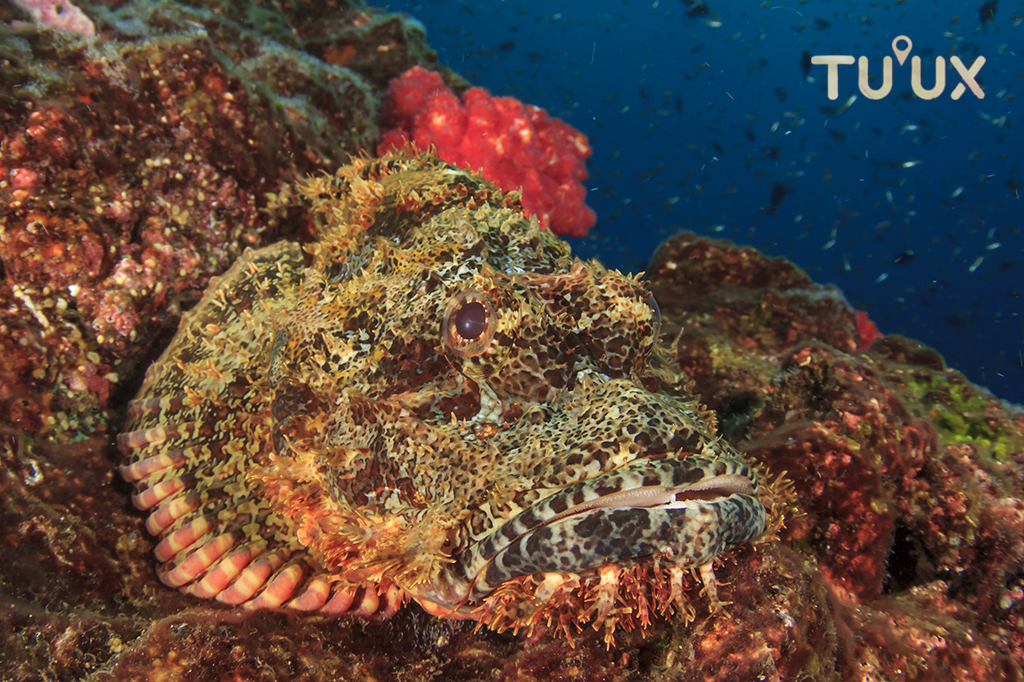
Su nombre no es metáfora: su piel irregular, llena de verrugas, protuberancias y manchas, imita a la perfección una roca cubierta de algas o coral muerto, volviéndolo prácticamente invisible.
- Tamaño: hasta 40 cm
- Cuerpo: ancho, robusto y de apariencia pétrea
- Ojos: dorsales, siempre atentos
- Estrategia: depredador de emboscada; no persigue, aspira a su presa en milisegundos
🪨 What exactly is this “rock with eyes”?
The “true” stonefish belongs to the genus Synanceia, widely regarded as the undisputed king of camouflage in the Indo-Pacific. Its reputation has traveled far, becoming almost mythical among tropical reef explorers.
The name isn’t poetic—it’s literal: its bumpy, warty skin and mottled colors mimic algae-covered rock or dead coral, making it extremely hard to spot.
- Size: up to ~40 cm
- Body: wide, robust, rock-like profile
- Eyes: set high on the head
- Hunting: ambush predator; it doesn’t chase— it sucks in prey in milliseconds
☠️ Un camuflaje perfecto… y letal
A diferencia de otros peces que huyen ante cualquier vibración, el pez piedra confía completamente en su disfraz. No se mueve. Esto lo vuelve especialmente peligroso en zonas rocosas o arrecifes poco profundos.
No es agresivo, pero sí extremadamente defensivo: su sistema de defensa está compuesto por 13 espinas dorsales eréctiles, conectadas a glándulas de veneno altamente potente.
¿Cómo funciona el veneno?
El veneno no se libera de forma constante. Se activa por presión. Si alguien pisa al pez, el peso del cuerpo comprime las glándulas y la toxina es inyectada directamente en la herida.
- Dolor inmediato e intenso (de los más fuertes reportados)
- Inflamación severa y posible necrosis del tejido
- Parálisis muscular y shock
- En casos extremos no tratados, riesgo cardiorrespiratorio
☠️ Perfect camouflage… and a serious hazard
Unlike many fish that bolt at the slightest vibration, stonefish trusts its disguise. It stays still—exactly what makes it dangerous on shallow reefs and rocky bottoms.
It isn’t aggressive, but it is highly defensive: its dorsal ridge carries 13 erectable spines linked to potent venom glands.
How does the venom work?
The venom isn’t released continuously. It’s pressure-activated. When stepped on, body weight compresses the glands and venom is injected into the wound.
- Immediate, intense pain (among the most severe reported)
- Severe swelling and possible tissue damage
- Muscle weakness, nausea, shock-like symptoms
- In untreated extreme cases, cardiopulmonary risk
🌴 ¿Existe el pez piedra en el Caribe mexicano?
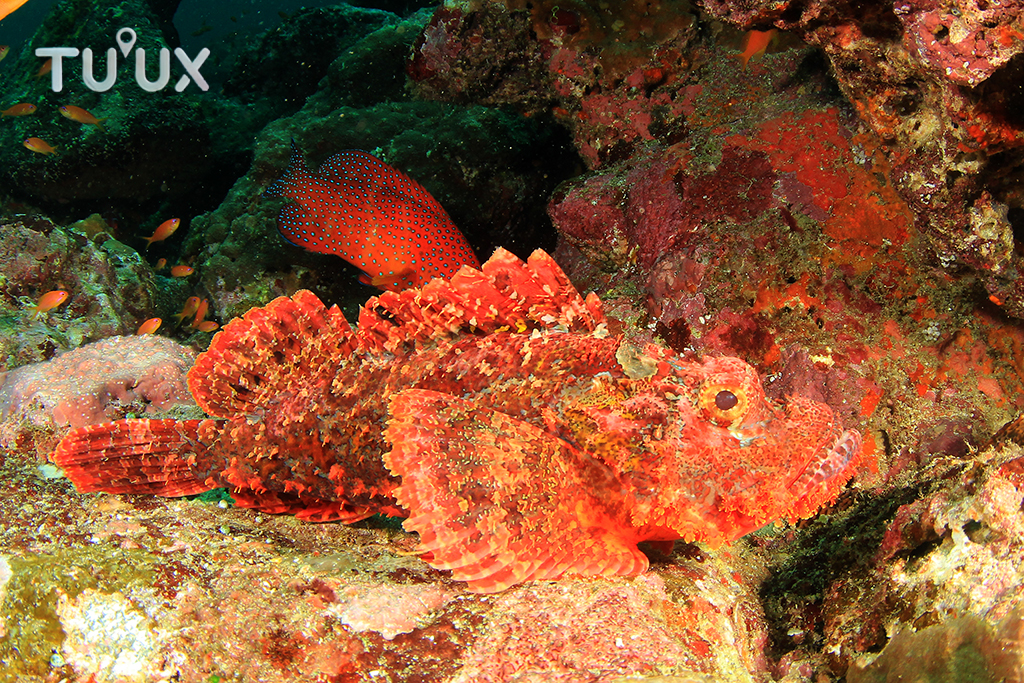
Aquí es donde conviene afinar la mirada. El pez piedra del género Synanceia no habita de forma natural en el Caribe. Sin embargo, en Mahahual y el Caribe mexicano vive un pariente muy cercano (y a menudo confundido): el pez escorpión caribeño (Scorpaena plumieri).
- Ambos se camuflan como rocas
- Ambos poseen espinas venenosas
- Ambos permanecen inmóviles en el fondo
Diferencia clave: el pez escorpión del Caribe puede causar dolor extremo y complicaciones serias, pero rara vez es mortal, a diferencia del pez piedra del Indo-Pacífico.
👉 Regla práctica: si parece una piedra… y tiene ojos… no lo toques.
🌴 Do stonefish live in the Mexican Caribbean?
This is where a sharper lens matters. The “true” stonefish (Synanceia) does not naturally occur in the Caribbean. However, Mahahual and the Mexican Caribbean have a close, look-alike relative that’s often confused with it: the Caribbean scorpionfish (Scorpaena plumieri).
- Both blend in like rocks
- Both have venomous spines
- Both stay motionless on the bottom
Key difference: Caribbean scorpionfish stings can cause extreme pain and serious symptoms, but they’re rarely fatal, unlike severe stonefish envenomation in the Indo-Pacific.
👉 Practical rule: if it looks like a rock… and it has eyes… don’t touch it.
🔥 Protocolo de emergencia: el calor es tu aliado
El veneno de estas especies es termolábil, lo que significa que se desactiva con calor. Aun así, la atención médica siempre es prioridad.
- Salir del agua inmediatamente.
- Sumergir la zona afectada en agua caliente (≈45 °C, sin quemar la piel) durante 30 a 90 minutos.
- No hacer torniquetes ni cortes.
- Buscar atención médica para limpieza profunda y evaluación.
Este contenido es informativo y no sustituye atención médica. Si hay dificultad para respirar, dolor fuera de control o desmayo: emergencia.
🔥 Emergency protocol: heat can help
The venom of these species is heat-labile, meaning it can be reduced with heat. Medical evaluation is still the priority.
- Exit the water immediately.
- Immerse the affected area in hot water (≈45 °C / 113 °F, not scalding) for 30–90 minutes.
- Do not use tourniquets or cut the wound.
- Seek medical care for proper cleaning and assessment.
This is informational and not medical advice. If there’s trouble breathing, uncontrolled pain, or fainting: seek emergency help.
🍽️ ¿Se puede comer el pez piedra?
Aunque suene contradictorio, sí. En algunas regiones de Asia, especialmente Japón (donde se conoce como okoze), el pez piedra es considerado una delicadeza.
Tras retirar cuidadosamente las espinas dorsales, su carne blanca es firme y delicada. Eso sí: solo chefs altamente capacitados pueden prepararlo con seguridad.
🍽️ Can you eat stonefish?
Surprisingly, yes. In parts of Asia—especially Japan (where it’s known as okoze)—stonefish is considered a delicacy.
Once the spines are carefully removed, the flesh is white, firm, and delicate. Still, only highly trained chefs should handle preparation.
🌊 El arrecife como advertencia viva
Tanto el pez piedra como el pez escorpión caribeño cumplen un papel importante en el equilibrio del arrecife, controlando poblaciones de peces pequeños y crustáceos. Su presencia suele indicar ecosistemas saludables y poco intervenidos.
- Flota, no pises el fondo.
- Usa botines de neopreno en zonas rocosas.
- Observa, admira y respeta.
El pez piedra no es un monstruo. Es un recordatorio silencioso de que el océano es bello… pero exige atención. En la naturaleza, el respeto sigue siendo la mejor protección.
🌊 The reef as a living warning
Both stonefish and Caribbean scorpionfish play an important role in reef balance by controlling small fish and crustacean populations. Their presence can signal healthy, less-disturbed ecosystems.
- Float—don’t step on the bottom.
- Wear reef booties in rocky areas.
- Observe, admire, and respect.
Stonefish isn’t a monster. It’s a quiet reminder that the ocean is beautiful… and demands attention. In nature, respect is still the best protection.
mahahual caribe mexicano arrecife pez piedra stonefish synanceia pez escorpión scorpaena plumieri espinas venenosas veneno termolábil primeros auxilios agua caliente seguridad snorkel buceo fauna marina