
FRAGATA
Mahahual · Costa Maya · Caribe Mexicano · Aves marinas
La fragata magnífica (Fregata magnificens), también conocida en México como fragata tijereta, es una de las aves más espectaculares que pueden observarse sobre las costas del Caribe mexicano. Sus enormes alas, su cola profundamente ahorquillada y su extraordinaria capacidad para aprovechar el viento la convierten en una auténtica especialista de la vida aérea.
Mahahual · Costa Maya · Mexican Caribbean · Seabirds
The magnificent frigatebird (Fregata magnificens) is one of the most striking seabirds seen over the Mexican Caribbean. Its enormous wings, deeply forked tail, and extraordinary ability to exploit wind and rising air make it a true specialist of life on the wing.
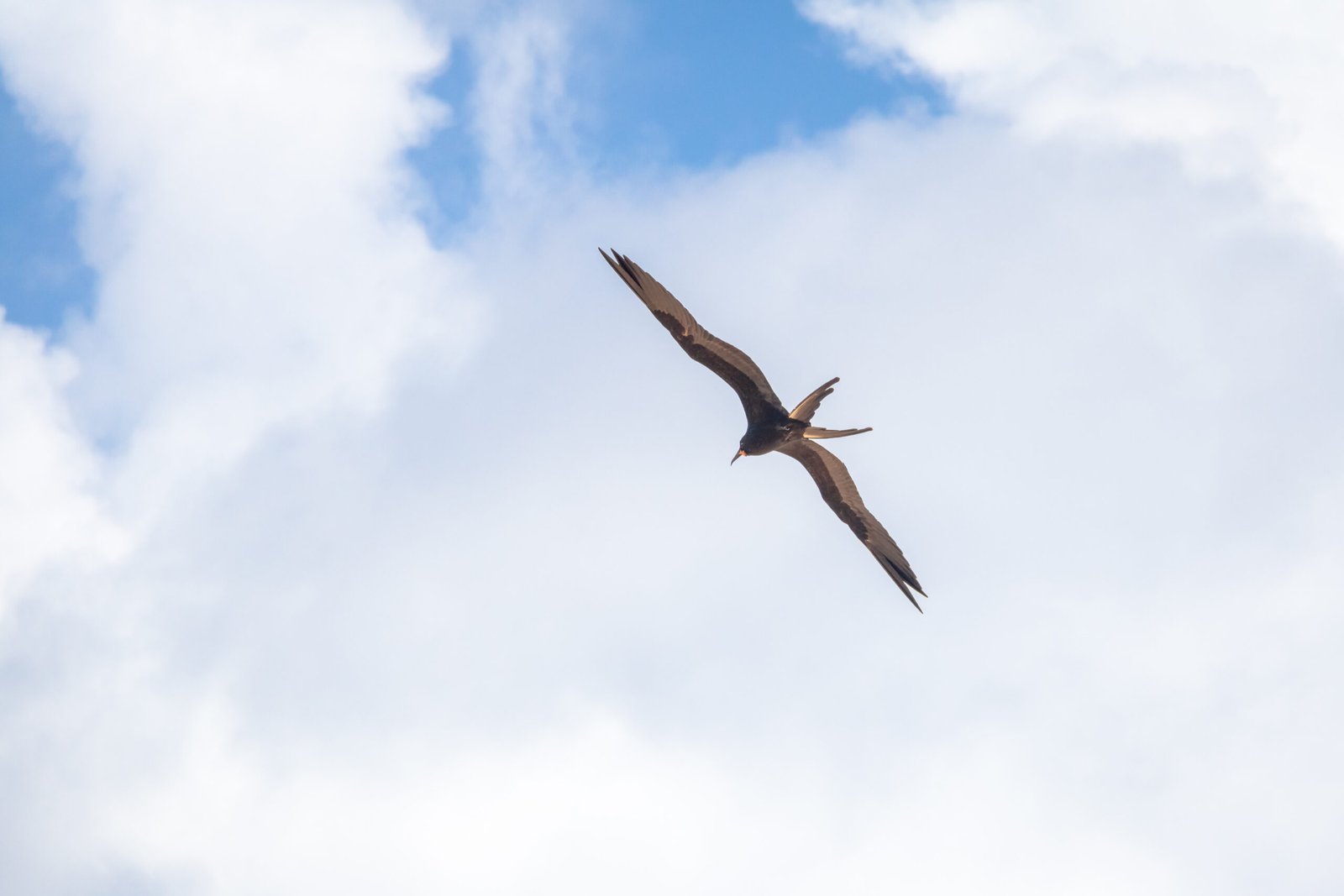
Cuando caminas frente al mar en Mahahual, no toda la fauna interesante está debajo del agua. Sobre el Caribe puede aparecer una gran silueta negra dando círculos prácticamente sin mover las alas: una fragata magnífica.
Esta ave está construida para pasar enormes cantidades de tiempo en el aire. Sus alas largas y angostas, cuerpo relativamente ligero y cola profundamente dividida le permiten aprovechar corrientes térmicas, brisas marinas y movimientos ascendentes del aire.
En Quintana Roo puede observarse sobre costas, lagunas, humedales, islas y mar abierto. En la Costa Maya, incluida Mahahual, es una de las grandes aves que pueden verse patrullando el litoral.
Cuando estés en el malecón, la playa o navegando frente a Mahahual, mira periódicamente hacia arriba. Una fragata puede encontrarse a decenas o cientos de metros sobre tu cabeza.
When walking along the sea in Mahahual, not all of the area’s remarkable wildlife is underwater. High above the Caribbean, a large dark silhouette may circle almost without moving its wings: a magnificent frigatebird.
This bird is built to spend enormous amounts of time in the air. Long narrow wings, a relatively lightweight body, and a deeply forked tail allow it to exploit thermals, sea breezes, and rising air currents.
In Quintana Roo, magnificent frigatebirds may be observed over coasts, lagoons, wetlands, islands, and open water. Around Costa Maya, including Mahahual, they are among the large seabirds frequently seen patrolling the coastline.
When you’re on Mahahual’s malecón, beach, or offshore, remember to look up. A frigatebird may be circling dozens or even hundreds of meters overhead.
🔎 La fragata magnífica en números
🔎 Magnificent frigatebird by the numbers
🪽 Una máquina diseñada para volar
Una fragata puede parecer enorme cuando abre las alas, pero su cuerpo es sorprendentemente ligero para esa envergadura.
📏 Alas enormes
Su envergadura supera los dos metros y proporciona una enorme superficie para planear.
🌬️ Corrientes térmicas
Aprovecha aire ascendente para ganar altura sin depender de un aleteo constante.
✂️ Cola ahorquillada
La cola funciona como una superficie de control extremadamente precisa durante maniobras aéreas.
🪶 Cuerpo ligero
La combinación de bajo peso y alas muy grandes favorece un vuelo extraordinariamente eficiente.
🪽 A machine built for flight
A frigatebird looks enormous when its wings are extended, yet its body is surprisingly light for such a large wingspan.
📏 Enormous wings
A wingspan exceeding two meters provides an enormous surface for soaring.
🌬️ Rising air
Frigatebirds use rising air currents to gain altitude without continuously beating their wings.
✂️ Forked tail
The deeply divided tail provides precise aerial control and maneuverability.
🪶 Lightweight body
Low body mass combined with huge wings makes soaring remarkably efficient.
🌊 Un ave marina que casi nunca se posa en el mar
Aunque pasa gran parte de su vida sobre el océano, la fragata magnífica no está diseñada para descansar sobre el agua como una gaviota o un pelícano.
Su plumaje carece de la impermeabilización típica de muchas otras aves marinas. Además, sus patas son pequeñas, lo que dificulta nadar y volver a despegar desde la superficie.
permanecer en el aire, capturar alimento desde la superficie sin sumergirse y utilizar árboles, arbustos, postes u otras estructuras para descansar.
🌊 A seabird that rarely sits on the ocean
Although it spends much of its life over the sea, the magnificent frigatebird is not designed to rest on the water like a gull or pelican.
Its feathers lack the waterproofing typical of many other seabirds. Its feet and legs are also relatively small, making swimming and taking off from the water difficult.
🐟 ¿Qué come una fragata magnífica?
Su dieta está formada principalmente por organismos marinos disponibles cerca de la superficie.
🐟 Peces
Peces voladores y otros peces cercanos a la superficie forman una parte importante de su dieta.
🦑 Calamares
También captura calamares y otros organismos marinos accesibles desde el aire.
🐟 Bancos de peces
Grandes peces depredadores pueden empujar peces pequeños hacia la superficie, creando oportunidades para las fragatas.
🐦 Otras aves
En ocasiones obtiene alimento persiguiendo a otras aves marinas.
🐟 What does a magnificent frigatebird eat?
Its diet is largely composed of marine animals available near the ocean surface.
🐟 Fish
Flying fish and other fish found near the surface are important prey.
🦑 Squid
Frigatebirds also capture squid and other marine organisms accessible from the air.
🐟 Feeding schools
Large predatory fish may force smaller fish toward the surface, providing feeding opportunities.
🐦 Other seabirds
They sometimes obtain food by pursuing other seabirds.
🏴☠️ La famosa pirata del cielo
La fragata magnífica es famosa por practicar cleptoparasitismo. Puede perseguir a otra ave marina en pleno vuelo hasta lograr que suelte o regurgite el alimento.
Entonces, gracias a su enorme maniobrabilidad, intenta capturar la presa antes de que caiga al agua.
La imagen de “pirata del cielo” es muy popular, pero las fragatas también capturan una parte importante de su alimento directamente.
🏴☠️ The famous pirate of the sky
Magnificent frigatebirds are famous for kleptoparasitism. They may chase another seabird until it drops or regurgitates recently captured food.
Thanks to their extraordinary maneuverability, frigatebirds may then seize the food before it reaches the water.
Although the “pirate of the sky” image is famous, frigatebirds also capture much of their food directly.
🔴 Machos, hembras y juveniles se ven diferentes
🔴 Macho adulto
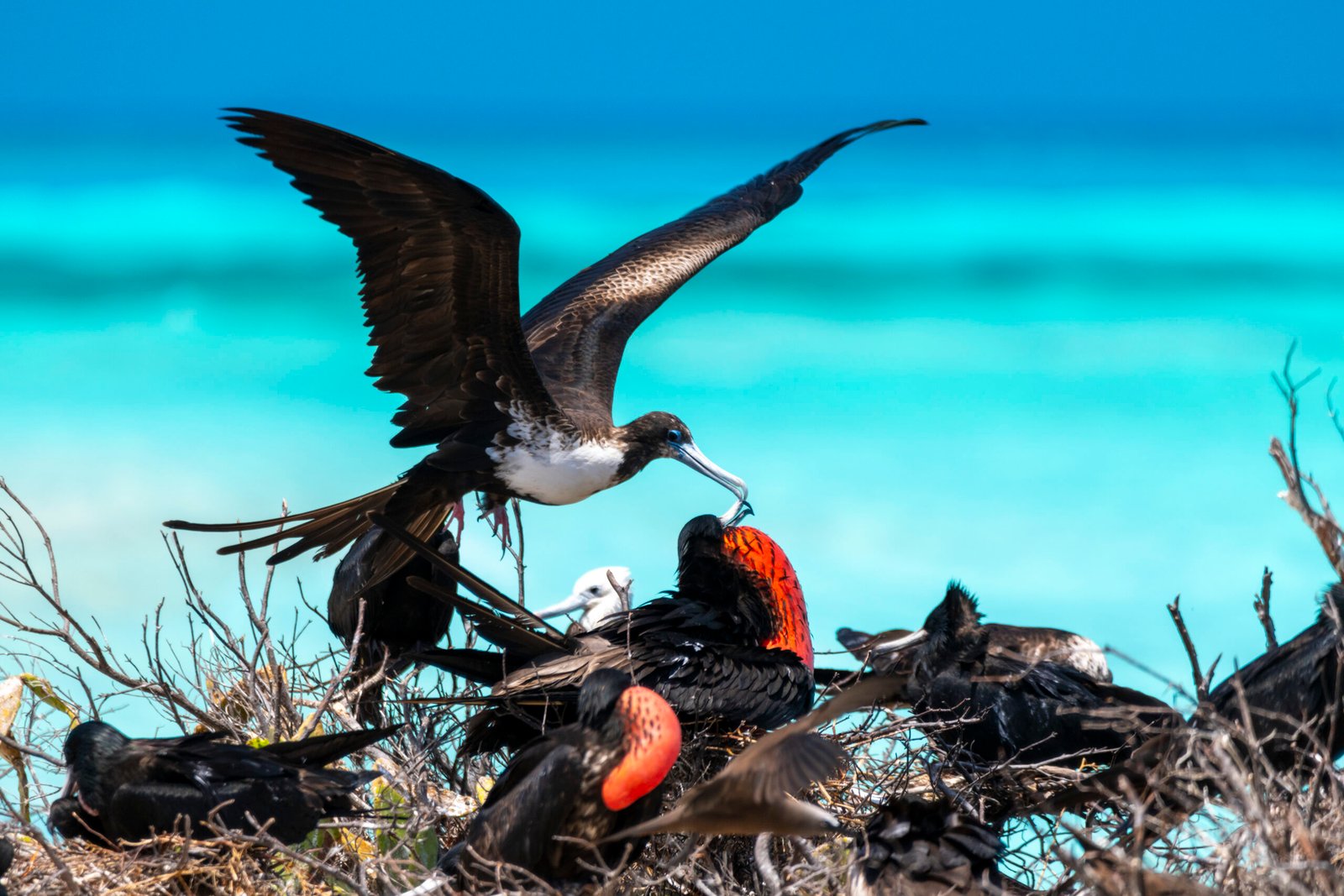
Es principalmente negro. Durante el cortejo infla un espectacular saco gular rojo similar a un globo.
⚪ Hembra adulta
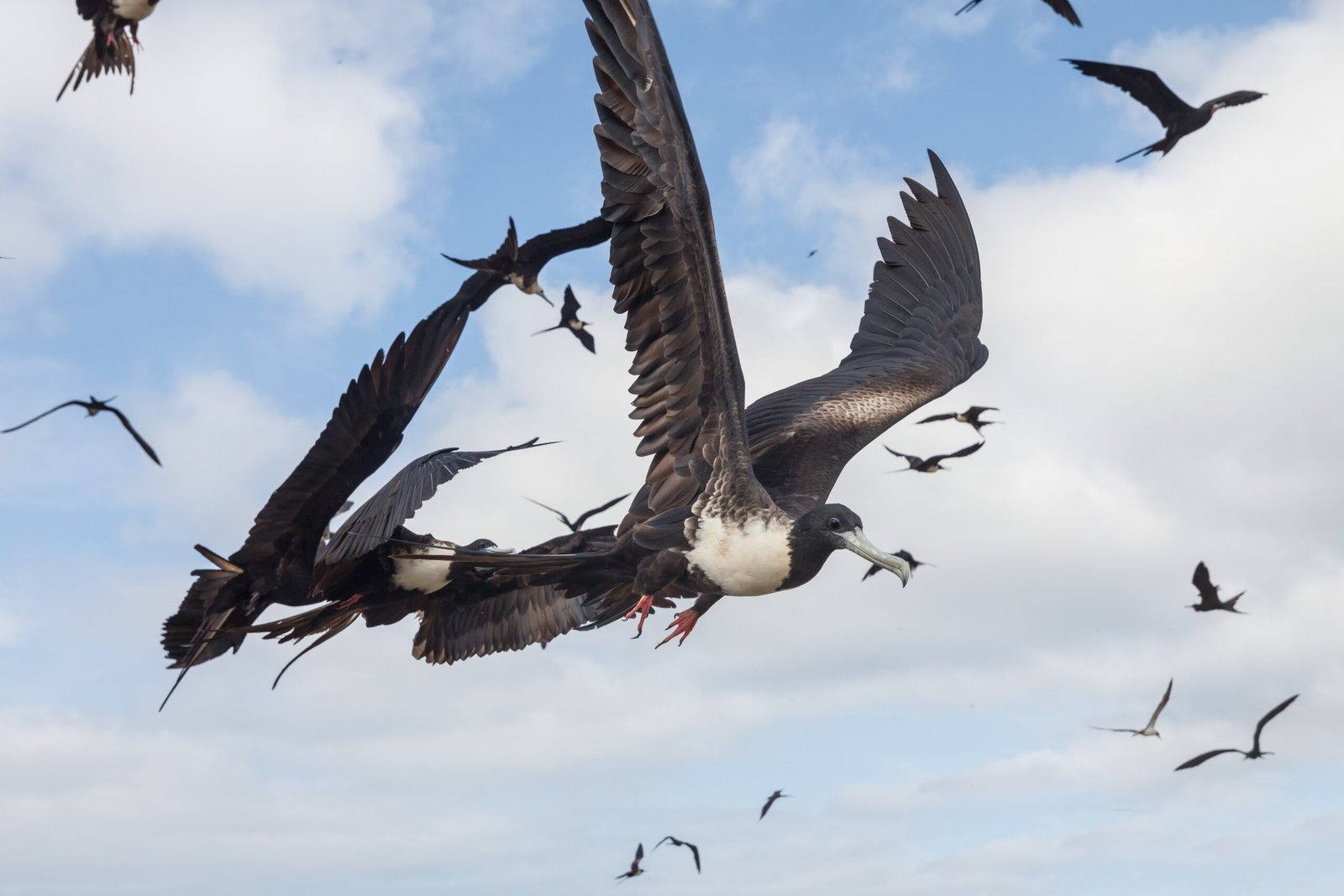
Presenta la cabeza oscura y una zona blanca muy visible en el pecho. Las hembras son además mayores que los machos.
🐣 Juvenil
Los jóvenes suelen presentar la cabeza y partes inferiores blancas.
🪶 Cola
Ambos sexos poseen la larga cola ahorquillada característica de la especie.
🔴 Males, females, and juveniles look different
🔴 Adult male
Adult males are mostly black. During courtship, they inflate the spectacular bright-red gular pouch.
⚪ Adult female
Females have a dark head and prominent white breast. Females are also larger than males.
🐣 Juvenile
Young birds often have a white head and pale underparts.
🪶 Tail
Both sexes have the long, deeply forked tail characteristic of the species.
🪺 Una reproducción extraordinariamente lenta
La fragata magnífica invierte muchísimo tiempo en producir y cuidar a cada cría. La puesta normal consta de un solo huevo.
Macho y hembra participan inicialmente en la reproducción. El macho transporta buena parte del material del nido y la hembra organiza la plataforma de ramas.
Después de los primeros meses, el macho puede abandonar la asociación reproductiva, mientras la hembra continúa alimentando y cuidando al joven durante un periodo excepcionalmente largo.
Cuando una especie produce únicamente un huevo y dedica tantos meses a una sola cría, perder un sitio de reproducción o provocar abandonos de nidos puede tener efectos importantes.
🪺 An exceptionally slow breeding cycle
Magnificent frigatebirds invest an extraordinary amount of time in each offspring. The normal clutch contains just one egg.
Both parents initially participate in reproduction. The male brings much of the nesting material, while the female arranges the sticks into a platform.
After the first months, the male may leave, while the female continues feeding and caring for the young bird for an exceptionally long period.
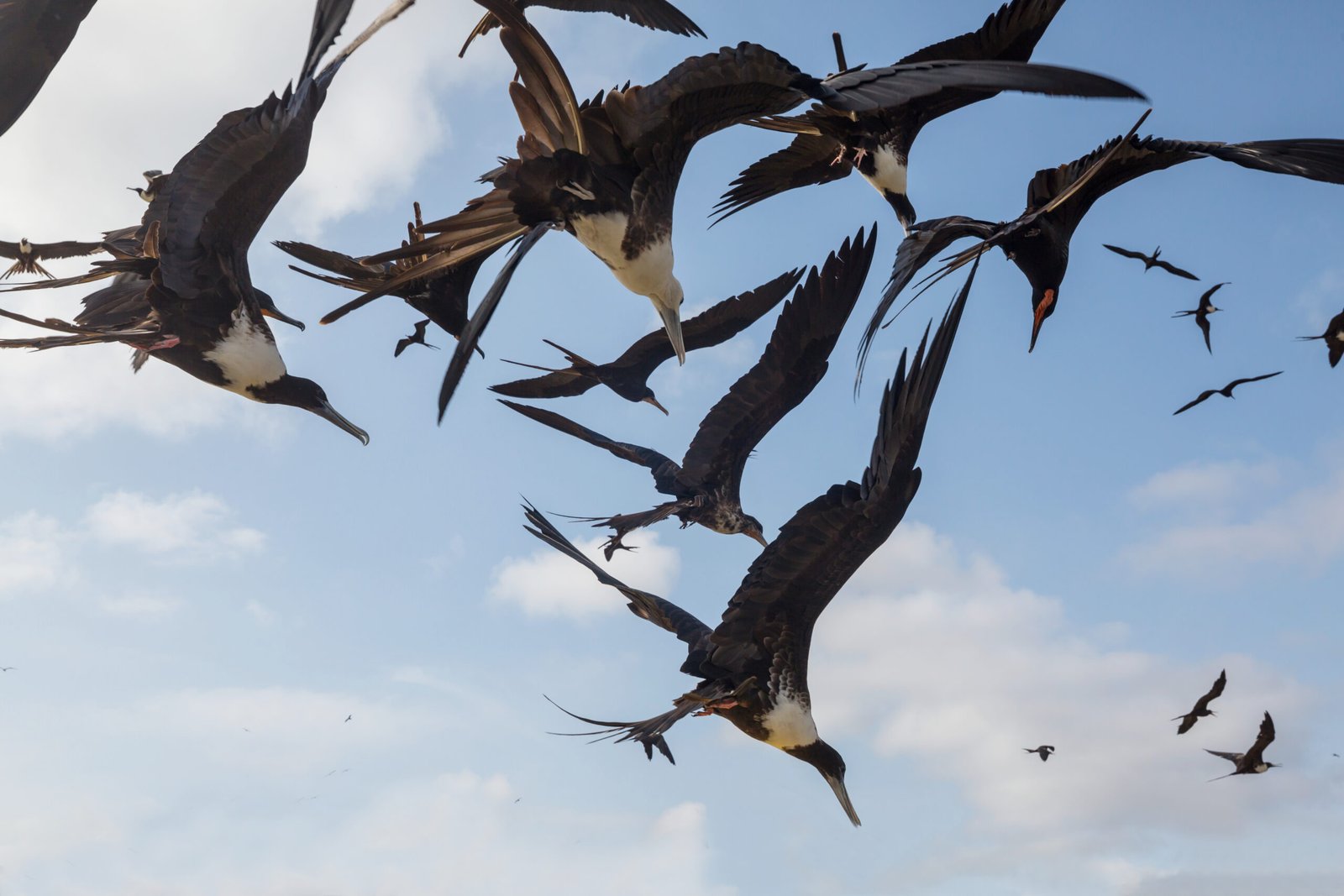
📸 Fragatas: vuelo, colonias y cortejo
Estas imágenes muestran diferentes aspectos de la vida de las fragatas: vuelo, colonias, descanso y comportamiento reproductivo.
📸 Frigatebirds: flight, colonies, and courtship
These images illustrate different aspects of frigatebird life, including flight, colonies, resting, and reproductive behavior.
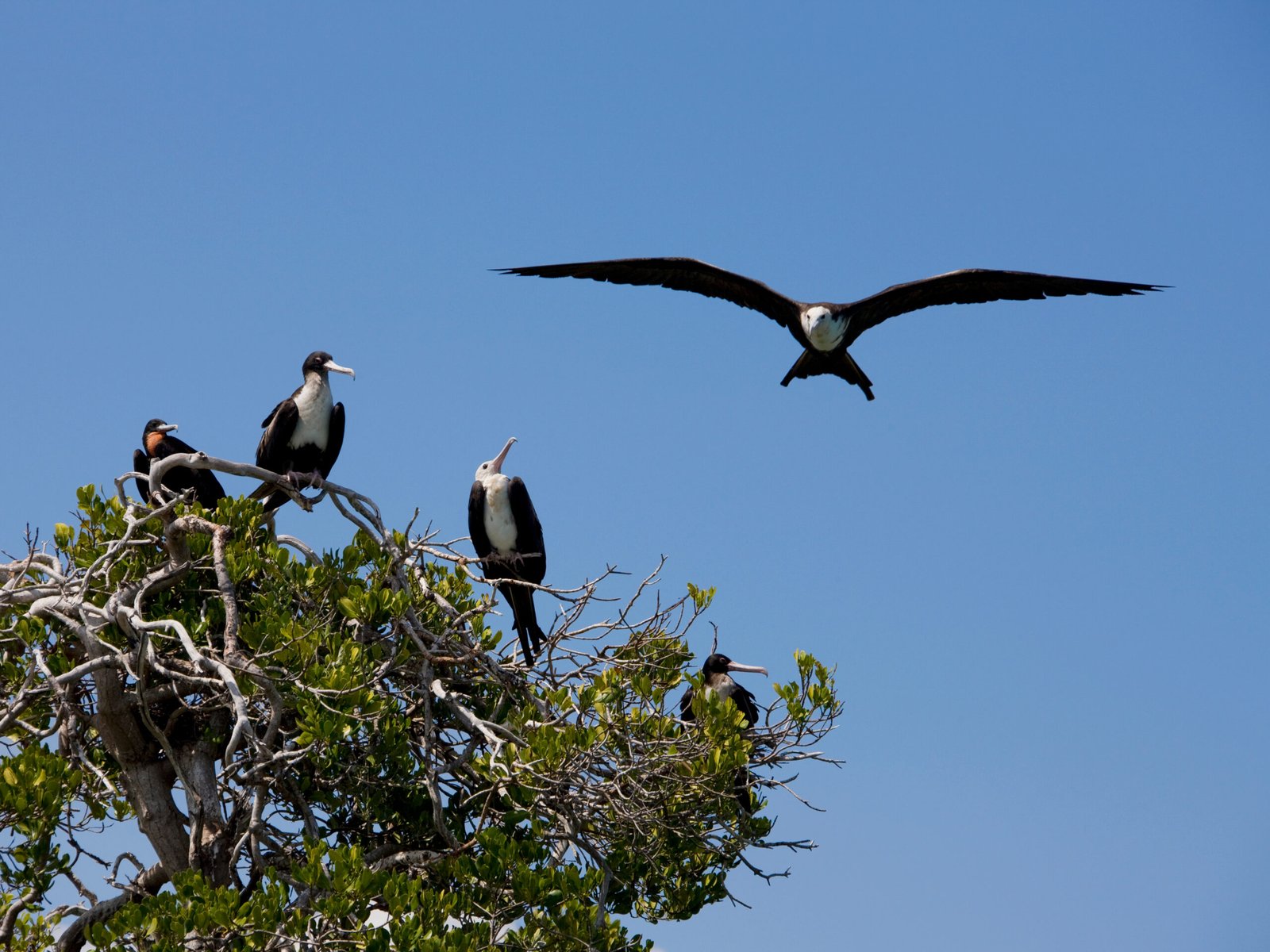
🌿 Islas, manglares y costas tropicales
La fragata magnífica utiliza ambientes costeros tropicales y subtropicales tanto para alimentarse como para descansar y reproducirse.
Las colonias reproductivas suelen instalarse sobre árboles y arbustos bajos de islas y cayos, incluidos manglares asociados con arrecifes.
🌳 Manglares
Ofrecen estructuras donde las aves pueden descansar, exhibirse y construir nidos.
🏝️ Islas y cayos
El aislamiento de ciertos sitios favorece la formación de colonias de aves marinas.
🌊 Mar abierto
Puede alejarse considerablemente de la costa mientras busca alimento.
🏖️ Litoral
En Costa Maya puede observarse patrullando la línea de costa y aguas cercanas.
🌿 Islands, mangroves, and tropical coasts
Magnificent frigatebirds use tropical and subtropical coastal environments for feeding, resting, and breeding.
Breeding colonies are often established in low trees and shrubs on islands and cays, including mangrove cays associated with coral reefs.
📍 La fragata magnífica en Mahahual
La ubicación de Mahahual frente al Caribe ofrece excelentes oportunidades para observar aves marinas. Las fragatas pueden aparecer sobre el litoral, las aguas frente al arrecife o desplazándose a mayor altura.
No es necesario encontrar una colonia para disfrutar de esta especie. En Mahahual, uno de los mejores escenarios es simplemente observar el cielo desde la playa o el malecón.
Busca una gran silueta con alas extremadamente largas, cuerpo pequeño en relación con las alas y una cola claramente dividida cuando está abierta.
📍 Magnificent frigatebirds in Mahahual
Mahahual’s location on the Caribbean coast creates excellent opportunities for observing seabirds. Frigatebirds may appear over the shoreline, waters near the reef, or much higher overhead.
You do not need to visit a breeding colony to enjoy this species. In Mahahual, simply watching the sky from the beach or malecón can be enough.
⚠️ Estado de conservación
A escala global, BirdLife International clasifica actualmente a la fragata magnífica como especie de Preocupación Menor .
La categoría global no significa que todas las colonias se encuentren en buenas condiciones. Las aves marinas que dependen de lugares específicos para reproducirse pueden ser vulnerables a cambios locales en esos sitios.
- Pérdida y modificación de vegetación costera.
- Desarrollo urbano o turístico cerca de colonias.
- Perturbación de sitios reproductivos.
- Contaminación marina y residuos plásticos.
- Introducción de depredadores en islas de anidación.
- Cambios en la disponibilidad de alimento.
- Huracanes y eventos climáticos extremos.
⚠️ Conservation status
Globally, BirdLife International currently classifies the magnificent frigatebird as Least Concern .
A favorable global category does not mean every breeding colony is secure. Seabirds that depend on specific nesting locations may be highly vulnerable to local habitat change.
👀 Cómo observar fragatas responsablemente
- Mantén distancia de nidos y colonias reproductivas.
- Utiliza binoculares o teleobjetivo.
- No intentes provocar el vuelo de un ave para conseguir una fotografía.
- Evita ruidos fuertes cerca de sitios de descanso o reproducción.
- Nunca alimentes aves silvestres.
- No utilices drones cerca de colonias si pueden alterar a las aves.
- Respeta las restricciones de las áreas naturales protegidas.
es aquella que puede tomarse sin hacer que el ave abandone su percha, cambie su vuelo o interrumpa su comportamiento.
👀 Responsible frigatebird watching
- Keep your distance from nests and breeding colonies.
- Use binoculars or a telephoto lens.
- Never deliberately flush a bird for a photograph.
- Avoid loud noise around resting and breeding sites.
- Never feed wild birds.
- Avoid drones near colonies when they may disturb birds.
- Follow all regulations in protected areas.
❓ Preguntas frecuentes sobre la fragata magnífica
¿Hay fragatas magníficas en Mahahual?
¿Cómo reconozco una fragata en vuelo?
¿Todas tienen la garganta roja?
¿Por qué no se posan sobre el mar?
¿Es verdad que roba comida a otras aves?
¿Cuántos huevos pone?
¿Está en peligro de extinción?
❓ Magnificent frigatebird FAQ
Are magnificent frigatebirds found in Mahahual?
How can I recognize one in flight?
Do all frigatebirds have a red throat?
Why don’t frigatebirds sit on the ocean?
Do frigatebirds really steal food?
How many eggs do they lay?
Is the species endangered?
- CONABIO · EncicloVida — Fregata magnificens / Fragata Tijereta.
- Cornell Lab of Ornithology · All About Birds — identificación, comportamiento, alimentación y reproducción de la fragata magnífica.
- BirdLife International — estado global y tendencia poblacional de Fregata magnificens.
Información revisada para la actualización editorial de octubre de 2026.
- CONABIO · EncicloVida — Fregata magnificens.
- Cornell Lab of Ornithology · All About Birds — identification, behavior, diet, and reproduction.
- BirdLife International — global conservation status and population trend of Fregata magnificens.
Information reviewed for the October 2026 editorial update.
La fragata magnífica lleva al extremo una de las habilidades fundamentales de las aves: volar.
Sus enormes alas, cuerpo ligero, cola ahorquillada y dominio de las corrientes de aire le permiten convertir el cielo en su principal hábitat.
En Mahahual, proteger manglares, humedales, islas, aguas costeras y sitios tranquilos beneficia no solamente a las fragatas, sino a toda una comunidad de aves marinas del Caribe mexicano.
La próxima vez que estés frente al mar, mira hacia arriba. Tal vez una fragata esté aprovechando el viento para dibujar círculos sobre Costa Maya.
The magnificent frigatebird pushes one of the defining abilities of birds to an extreme: flight.
Huge wings, a lightweight body, deeply forked tail, and mastery of rising air allow it to turn the sky into its primary habitat.
Around Mahahual, protecting mangroves, wetlands, islands, coastal waters, and quiet nesting habitat benefits not only frigatebirds but an entire community of Caribbean seabirds.
Next time you’re by the sea, remember to look up. A frigatebird may be using the wind to draw circles above Costa Maya.
fragata magnífica Mahahual fragata tijereta Fregata magnificens magnificent frigatebird aves Mahahual aves Costa Maya aves Quintana Roo aves marinas Caribe mexicano birdwatching Mahahual birdwatching Costa Maya saco gular rojo fragata Caribe cola ahorquillada cleptoparasitismo manglares Quintana Roo aves marinas México conservación aves marinas