ESTROMATOLITOS
Caribe Mexicano · Bacalar · Mahahual · Naturaleza
🪨 Los Guardianes Milenarios del Planeta Tierra
Estromatolitos: “piedras vivas” que construyen el planeta milímetro a milímetro desde hace miles de millones de años.
Mexican Caribbean · Bacalar · Mahahual · Nature
🪨 Earth’s Ancient Guardians
Stromatolites: “living rocks” that have been building the planet millimeter by millimeter for billions of years.
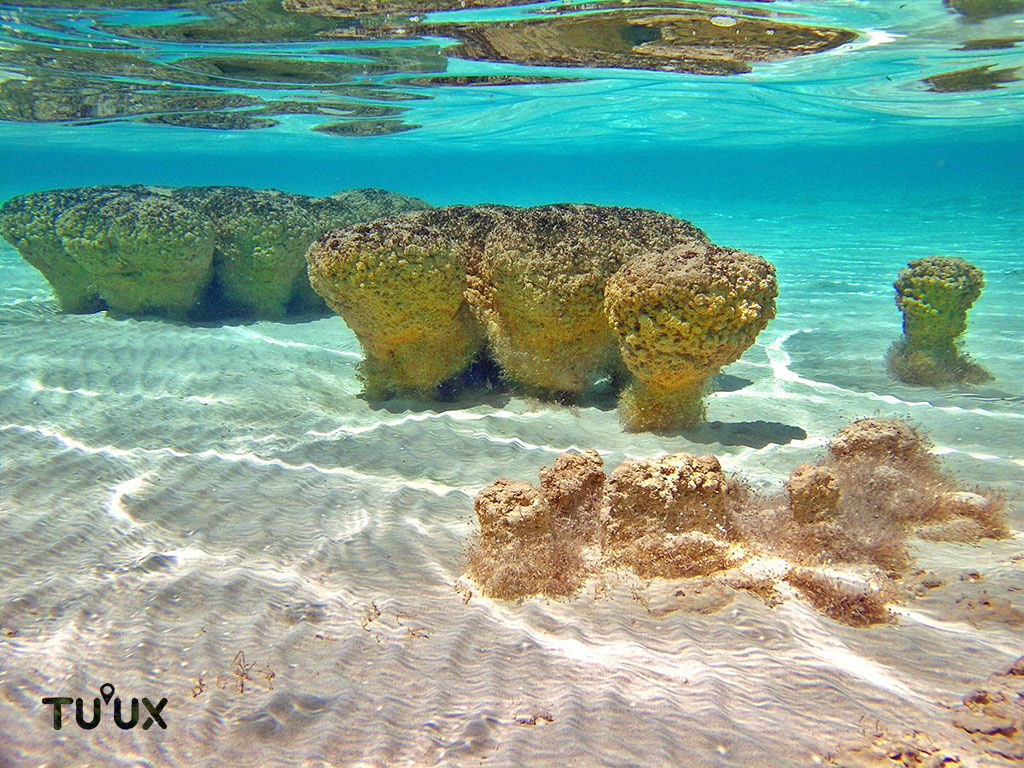
Imagínate ver organismos vivos que existían mucho antes que los dinosaurios. En aguas claras del Caribe Mexicano, como Bacalar (y ciertos sistemas costeros de la región), puedes observarlos: estromatolitos, fósiles vivientes que siguen creando historia bajo el agua.
Imagine seeing living organisms that existed long before dinosaurs. In crystal-clear waters like Bacalar (and some coastal systems in the region), you can spot them: stromatolites—living fossils still building history underwater.
🌍 ¿Qué son los estromatolitos?
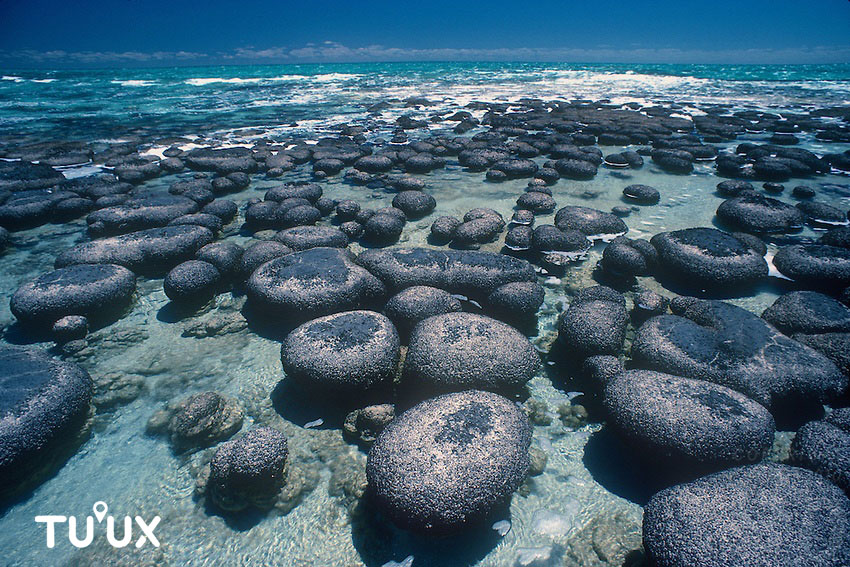
A simple vista parecen rocas, pero son estructuras vivas formadas por capas de cianobacterias. Estas micro-constructores hacen fotosíntesis, atrapan sedimentos y “pegan” minerales del agua, creando domos, columnas o alfombras que crecen a un ritmo extremadamente lento: menos de un milímetro por año.
🌍 What are stromatolites?
They may look like ordinary rocks, but they’re living structures formed by layers of cyanobacteria. These microscopic builders photosynthesize, trap sediments, and bind minerals from the water—slowly creating domes, columns, or mats that grow at an astonishingly slow rate: less than a millimeter per year.
🕰 Un viaje al pasado: 3,500 millones de años
Los estromatolitos existen desde hace más de 3,500 millones de años. A través de la fotosíntesis, ayudaron a liberar oxígeno en la atmósfera primitiva, un cambio que transformó el planeta y abrió el camino para formas de vida más complejas.
En pocas palabras: sin procesos como este, la vida tal como la conocemos no habría sido posible.
🕰 A journey back in time: 3.5 billion years
Stromatolites have existed for over 3.5 billion years. Through photosynthesis, they helped release oxygen into Earth’s early atmosphere—an event that reshaped the planet and made complex life possible.
Simply put: without processes like this, life as we know it likely wouldn’t exist.
📍 ¿Dónde se pueden ver estromatolitos vivos?
Hoy sobreviven solo en ambientes específicos, donde las condiciones limitan la competencia biológica. Algunos lugares famosos incluyen:
- 🌊 Shark Bay, Australia
- 🏜 Cuatro Ciénegas, Coahuila, México
- 💧 Laguna de Bacalar, Quintana Roo, México
- 🌿 Lagoa Salgada, Brasil
En el Caribe mexicano también pueden aparecer en sistemas costeros y lagunares con condiciones adecuadas.
📍 Where can you see living stromatolites?
Today they survive only in specific environments where conditions limit biological competition. Some iconic places include:
- 🌊 Shark Bay, Australia
- 🏜 Cuatro Ciénegas, Coahuila, Mexico
- 💧 Bacalar Lagoon, Quintana Roo, Mexico
- 🌿 Lagoa Salgada, Brazil
In the Mexican Caribbean, they may also occur in certain coastal/lagoon systems under the right conditions.
🌿 Importancia ecológica actual
- Ayudan a filtrar y oxigenar el agua
- Dan refugio a microvida y larvas
- Estabilizan sedimentos
- Son indicadores de calidad ambiental
🌿 Why they still matter today
- They help filter and oxygenate the water
- They provide habitat for micro-life and larvae
- They stabilize sediments
- They can indicate environmental quality
⚠️ ¿Por qué están en peligro?
A pesar de haber resistido eras completas, hoy enfrentan amenazas humanas: contaminación, turismo irresponsable, químicos (incluyendo ciertos bloqueadores), extracción excesiva de agua y desarrollo urbano sin control.
⚠️ Why are they at risk?
Despite surviving entire geological eras, they’re now threatened by human activity: pollution, careless tourism, chemicals (including some sunscreens), excessive water extraction, and unregulated development.
🛡 Cómo protegerlos
- Respeta zonas delimitadas y señalizadas
- No los toques ni camines sobre ellos
- Evita entrar al agua con cremas/bloqueadores químicos
- Apoya turismo sustentable y educación ambiental
🛡 How to protect them
- Respect marked and restricted areas
- Don’t touch or step on them
- Avoid entering the water with chemical lotions/sunscreens
- Support sustainable tourism and environmental education
✨ Conclusión
Los estromatolitos son vida milenaria que todavía respira y construye bajo el agua. Protegerlos es cuidar un capítulo fundamental de la historia de la Tierra. La próxima vez que los veas, míralos como lo que son: guardianes silenciosos del planeta.
✨ Conclusion
Stromatolites are ancient life still breathing and building underwater. Protecting them means protecting a key chapter of Earth’s history. Next time you see them, look again—these are the planet’s silent guardians.
estromatolitos bacalar mahahual caribe mexicano fósiles vivientes cianobacterias fotosíntesis conservación turismo sustentable