CANGREJO
🦀 Cangrejos de Mahahual: pequeños guardianes del Caribe mexicano
Entre la arena, los manglares, los pastos marinos y el arrecife vive un grupo de animales mucho más importante de lo que parece. Descubrir a los cangrejos de Mahahual es mirar de cerca una de las piezas discretas que mantienen vivo al Caribe.
Cuando pensamos en la fauna de Mahahual solemos imaginar tortugas, peces tropicales, rayas o manatíes. Pero muy cerca del fondo, entre piedras, algas, arena y raíces, existe otro mundo que casi siempre pasa desapercibido: el de los cangrejos.
No existe un único “cangrejo de Mahahual”. La costa del Caribe mexicano ofrece distintos ambientes y cada uno puede albergar crustáceos con formas de vida muy diferentes. Algunos permanecen ligados al arrecife, otros se refugian entre rocas, algunos utilizan los pastos marinos y otros incluso pasan buena parte de su vida fuera del agua.
🌊 Un pequeño animal conectado con todo el Caribe
Los cangrejos forman parte de una compleja red ecológica. Dependiendo de la especie pueden consumir algas, materia orgánica, pequeños organismos o restos de alimento, mientras que al mismo tiempo forman parte de la dieta de peces, aves y otros animales costeros.
Especialmente importantes son los ambientes de pastos marinos. Estas praderas submarinas funcionan como refugio y zona de alimentación para numerosos invertebrados, peces juveniles, camarones y cangrejos.
Mahahual destacó en un estudio científico de 2026
Una investigación publicada en el Journal of Crustacean Biology estudió la presencia de Mithraculus sculptus y Mithraculus coryphe en lagunas costeras del sur del Caribe mexicano.
Los investigadores registraron 329 individuos en el conjunto de sitios estudiados y encontraron una mayor abundancia durante la temporada de lluvias. Entre los lugares muestreados, Mahahual presentó la mayor abundancia.
El fondo de Mahahual donde aparecieron estuvo relacionado con fragmentos de coral, arena, algas y pastos marinos. Es una fotografía científica interesante de la diversidad existente en algunos ambientes costeros del Caribe mexicano.
🏝️ ¿Dónde viven los cangrejos de Mahahual?
Playas y arena
La franja costera ofrece alimento, humedad y refugios. Algunas especies excavan, mientras otras se desplazan buscando restos orgánicos y pequeñas presas.
Zonas rocosas
Grietas, piedras y charcos intermareales crean pequeños refugios donde los crustáceos pueden protegerse del oleaje, depredadores y exposición al sol.
Pastos marinos
Las praderas submarinas son ecosistemas extremadamente productivos y sirven como vivero, refugio y zona de alimentación para numerosas especies.
Arrecife
Fragmentos de coral, algas y cavidades ofrecen una compleja estructura tridimensional donde pequeños cangrejos pueden alimentarse y esconderse.
🔎 Algunos cangrejos que vale la pena conocer
La diversidad de crustáceos del Caribe es enorme. En Mahahual existen registros científicos y de observación que permiten destacar algunos habitantes particularmente interesantes.
Cangrejo esmeralda
Mithraculus sculptusPequeño cangrejo verdoso asociado con ambientes arrecifales, piedras, algas y praderas marinas. Fue una de las especies incluidas en el estudio científico del sur del Caribe mexicano en el que Mahahual presentó la mayor abundancia registrada.
Mithraculus coryphe
Mithraculus corypheOtro pequeño representante de los cangrejos del Caribe. Su presencia junto con M. sculptus ayuda a entender la relación entre crustáceos, algas, pastos marinos y fondos con fragmentos de coral.
Jaiba caribeña
Callinectes ornatusUna especie de jaiba ampliamente distribuida en el Atlántico occidental tropical. Ha sido incluida en registros de fauna intermareal realizados en Punta Piedra, Mahahual.
Jaiba azul
Callinectes sapidusReconocible por sus patas adaptadas para nadar y tonalidades azuladas. También aparece entre los crustáceos incluidos en registros de fauna intermareal de Punta Piedra.
Cangrejo ermitaño caribeño
Coenobita clypeatusAunque sus adultos son terrestres, su ciclo de vida continúa conectado con el océano: sus larvas necesitan agua marina. Utiliza conchas vacías como protección y forma parte de la fauna costera del Caribe.
Cangrejo rey del Caribe
Maguimithrax spinosissimusUno de los grandes herbívoros del arrecife caribeño. Su capacidad para consumir macroalgas lo ha convertido en una especie de interés para proyectos de restauración coralina.
🧩 ¿Por qué son importantes?
Control de algas
Algunas especies herbívoras consumen algas y ayudan a modificar la competencia por espacio dentro de los ecosistemas arrecifales.
Reciclaje natural
Muchas especies aprovechan materia orgánica y restos de alimento, contribuyendo al movimiento de nutrientes dentro del ecosistema.
Red alimentaria
Los cangrejos también son alimento para numerosos peces, aves y otros depredadores, conectando diferentes niveles de la cadena alimentaria.
🪸 Un cangrejo que podría ayudar a los corales
El cangrejo rey del Caribe (Maguimithrax spinosissimus) es uno de los herbívoros más eficientes del arrecife. En Quintana Roo se han desarrollado proyectos de reproducción y estudio de esta especie con el objetivo de evaluar su capacidad para reducir macroalgas y favorecer las condiciones del ecosistema coralino.
👀 Cómo observarlos sin molestarlos
Encontrar un cangrejo durante una caminata por la costa puede ser una gran oportunidad para detenerse y observar. La mejor experiencia ocurre cuando dejamos que el animal continúe haciendo exactamente lo que estaba haciendo antes de nuestra llegada.
- No persigas ni intentes atrapar cangrejos.
- No introduzcas las manos en grietas o madrigueras.
- No retires animales del mar para fotografiarlos.
- No alimentes fauna silvestre.
- Evita llevarte conchas que todavía puedan servir como refugio para cangrejos ermitaños.
- En zonas arrecifales, observa sin tocar coral, pastos marinos ni otros organismos.
🌊 Pequeños habitantes, grandes conexiones
Un cangrejo escondido debajo de una piedra puede parecer un detalle menor frente a la inmensidad del Caribe. Pero su historia conecta algas, pastos marinos, arrecifes, peces, manglares y playas.
Esa es precisamente una de las grandes lecciones de la naturaleza de Mahahual: nada vive completamente aislado . Cada organismo ocupa un lugar dentro de una red mucho mayor.
La próxima vez que encuentres un cangrejo caminando sobre la arena o asomándose entre las rocas, obsérvalo por unos segundos. Tal vez estés viendo una de las pequeñas piezas que mantienen funcionando al Caribe mexicano.
🦀 Crabs of Mahahual: Small Guardians of the Mexican Caribbean
Between sand, mangroves, seagrass meadows and coral reefs lives a group of animals far more important than it may appear. Discovering Mahahual’s crabs means looking closely at one of the quiet pieces that help keep the Caribbean alive.
When we think about Mahahual wildlife, sea turtles, tropical fish, rays and manatees usually come to mind. Yet close to the bottom, among rocks, algae, sand and roots, another world often goes unnoticed: the world of crabs .
There is no single “Mahahual crab.” The Mexican Caribbean coastline contains several habitats, each capable of supporting crustaceans with very different lifestyles. Some remain closely associated with reefs, others hide among rocks, some use seagrass meadows and others spend much of their adult lives on land.
🌊 A small animal connected to the entire Caribbean
Crabs are part of a complex ecological network. Depending on the species, they may consume algae, organic matter, small organisms or food remains, while also becoming prey for fish, birds and other coastal animals.
Seagrass meadows are particularly important. These underwater fields provide shelter, nursery habitat and feeding grounds for many invertebrates, juvenile fish, shrimp and crabs.
Mahahual stood out in a 2026 scientific study
Research published in the Journal of Crustacean Biology examined the occurrence of Mithraculus sculptus and Mithraculus coryphe in coastal lagoons of the southern Mexican Caribbean.
Researchers recorded 329 individuals across all sampled sites and found greater abundance during the rainy season. Among the locations surveyed, Mahahual showed the highest abundance.
The Mahahual seabed where these crabs occurred was associated with coral rubble, sand, algae and seagrass. It provides an interesting scientific snapshot of the diversity found within coastal habitats of the Mexican Caribbean.
🏝️ Where do Mahahual’s crabs live?
Beaches and sand
Coastal areas provide food, moisture and shelter. Some species dig burrows while others move across the shore searching for organic material and small prey.
Rocky shores
Cracks, rocks and intertidal pools create small shelters where crustaceans can avoid waves, predators and direct exposure to the tropical sun.
Seagrass meadows
Underwater meadows are highly productive ecosystems that provide nursery habitat, shelter and food for numerous marine species.
Coral reefs
Coral rubble, algae and reef cavities create a complex three-dimensional habitat where small crabs can feed and hide.
🔎 A few crabs worth knowing
Caribbean crustacean diversity is enormous. Scientific studies and wildlife observations from Mahahual allow us to highlight several particularly interesting inhabitants.
Emerald crab
Mithraculus sculptusA small greenish crab associated with reef environments, rocks, algae and seagrass. It was one of the species included in the southern Mexican Caribbean study in which Mahahual showed the greatest abundance.
Mithraculus coryphe
Mithraculus corypheAnother small Caribbean crab whose occurrence alongside M. sculptus helps researchers explore connections among crustaceans, algae, seagrass and coral-rubble habitats.
Caribbean swimming crab
Callinectes ornatusA swimming crab widely distributed through the tropical western Atlantic. It has been included in intertidal wildlife observations from Punta Piedra, Mahahual.
Blue crab
Callinectes sapidusRecognizable by its swimming-adapted rear legs and blue coloration. It also appears among crustaceans included in wildlife records from Punta Piedra.
Caribbean hermit crab
Coenobita clypeatusAlthough adults are terrestrial, their life cycle remains connected to the ocean because their larvae require seawater. They use empty shells for protection and are part of the wider Caribbean coastal fauna.
Caribbean king crab
Maguimithrax spinosissimusOne of the major herbivores on Caribbean reefs. Its remarkable capacity to consume macroalgae has made it an important species for experimental coral reef restoration projects.
🧩 Why are crabs important?
Algae control
Some herbivorous species consume algae and can influence competition for space within reef ecosystems.
Natural recycling
Many species consume organic material and food remains, helping move nutrients through the ecosystem.
Food webs
Crabs are themselves prey for many fish, birds and other predators, connecting different levels of coastal food webs.
🪸 A crab that could help coral reefs
The Caribbean king crab (Maguimithrax spinosissimus) is one of the most efficient herbivores on Caribbean reefs. Research and propagation projects in Quintana Roo have examined its potential to reduce macroalgae and improve conditions for coral reef recovery.
👀 How to observe them responsibly
Finding a crab while walking along the coast is a great reason to stop and watch. The best encounter happens when the animal can continue doing exactly what it was doing before we arrived.
- Do not chase or attempt to catch crabs.
- Do not place your hands inside cracks or burrows.
- Never remove marine animals from the water for photos.
- Do not feed wildlife.
- Avoid collecting shells that could still become homes for hermit crabs.
- On reefs, observe without touching coral, seagrass or other organisms.
🌊 Small inhabitants, big connections
A crab hiding beneath a rock can seem insignificant beside the enormous Caribbean Sea. Yet its story connects algae, seagrass, coral reefs, fish, mangroves and beaches.
That is one of Mahahual’s great ecological lessons: nothing lives completely alone . Every organism occupies a place within a much larger network.
The next time you see a crab crossing the sand or peeking from between coastal rocks, watch it for a few seconds. You may be looking at one of the small pieces helping keep the Mexican Caribbean working.
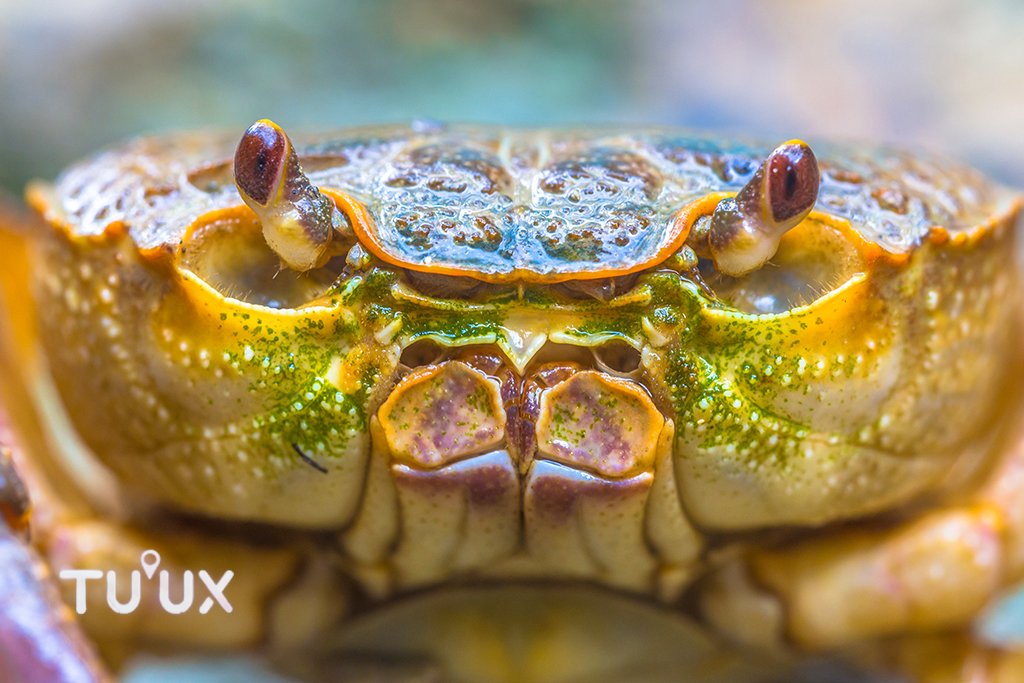
📸 Cangrejos entre arena, algas y roca
📸 Crabs among sand, algae and coastal rocks
Una mirada cercana a estos discretos habitantes de la costa.
A closer look at these quiet inhabitants of the coast.
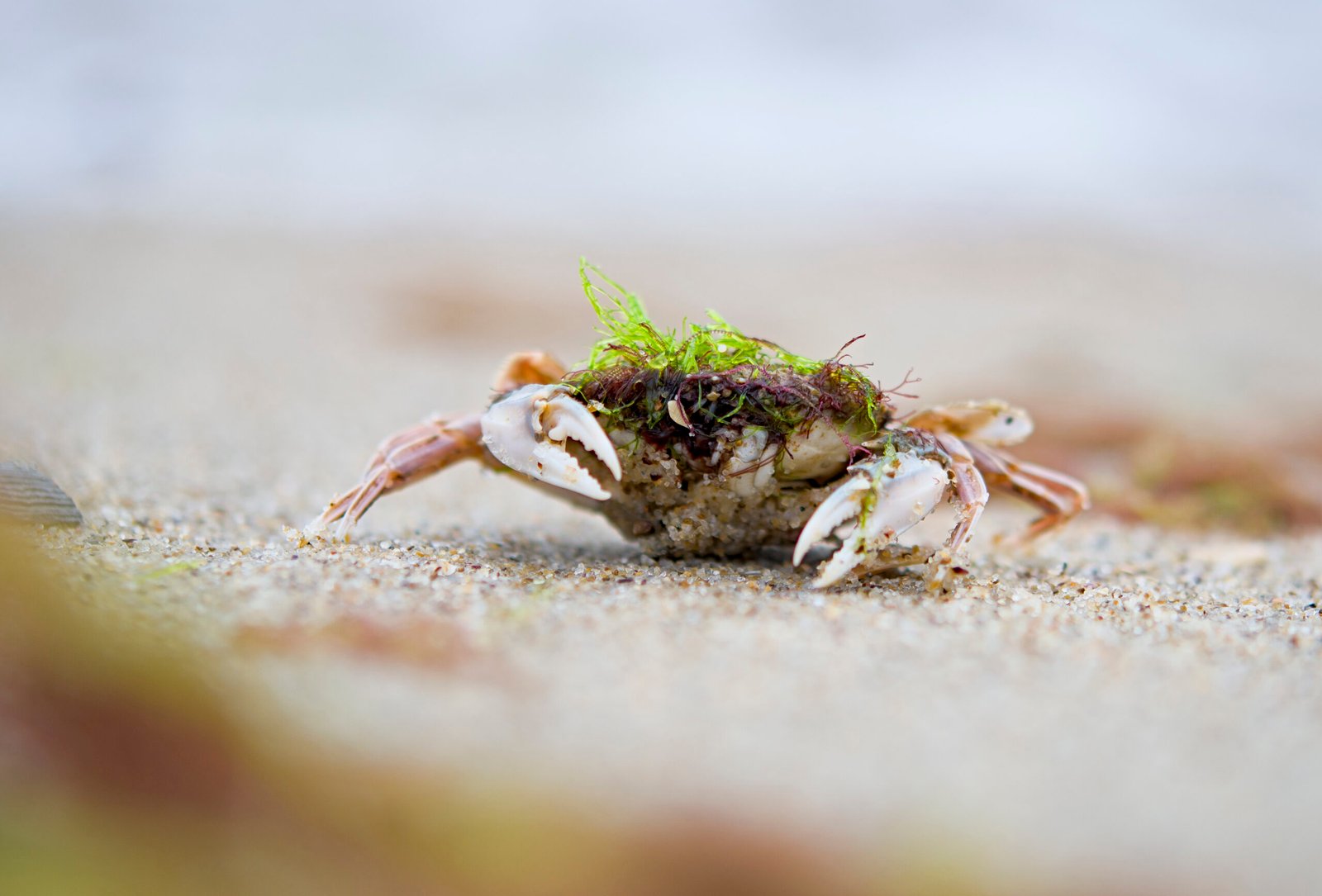
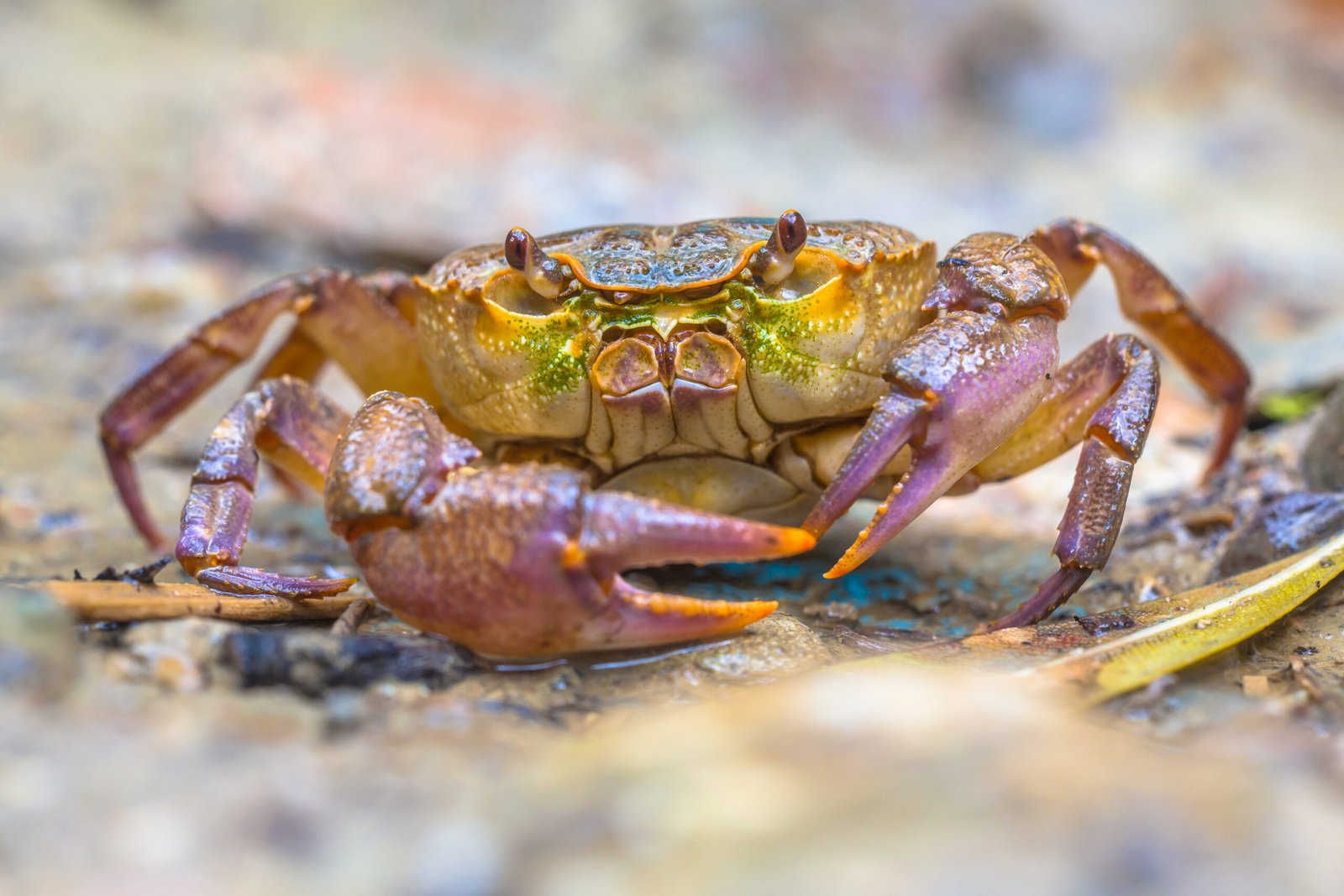
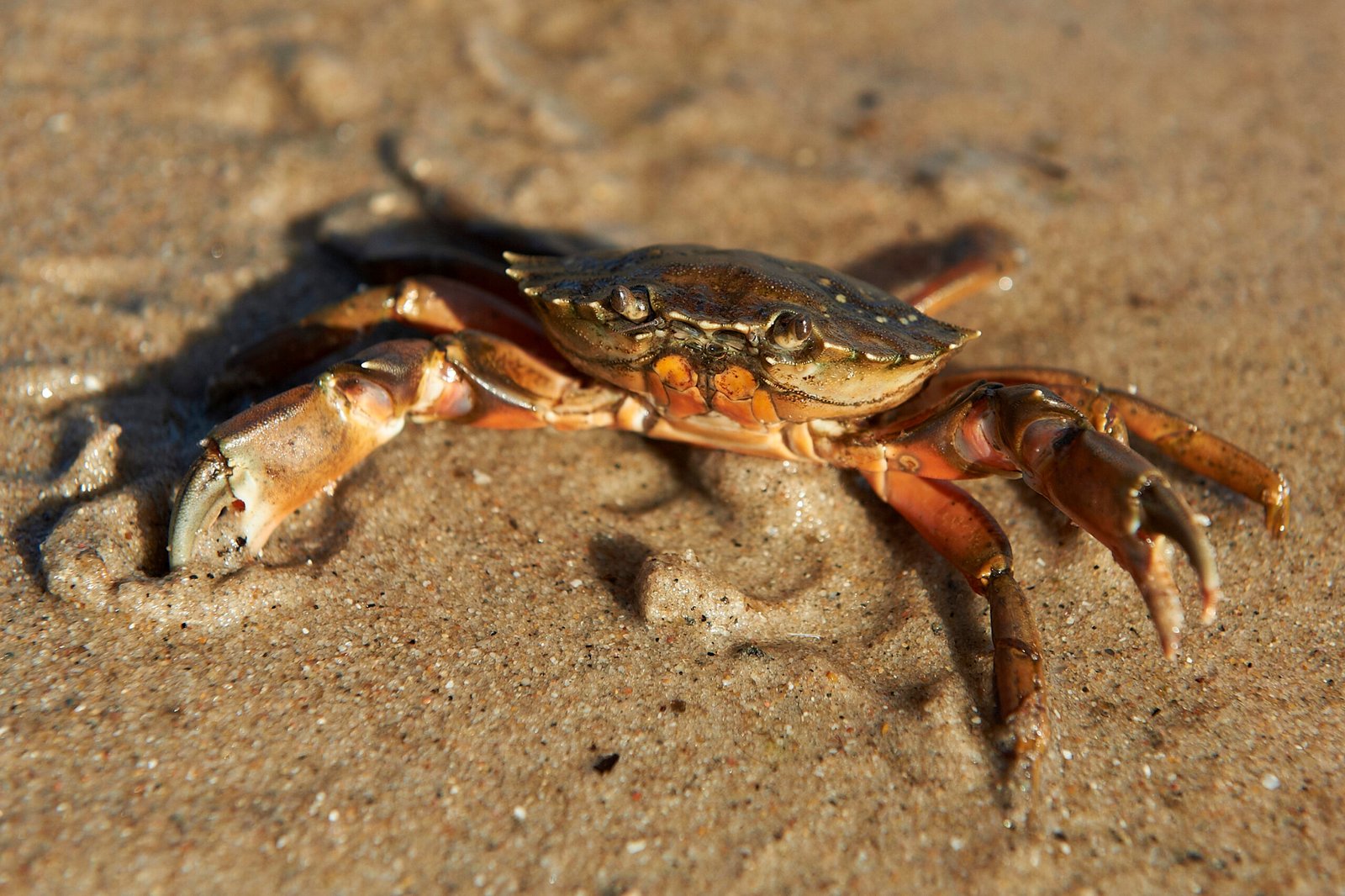
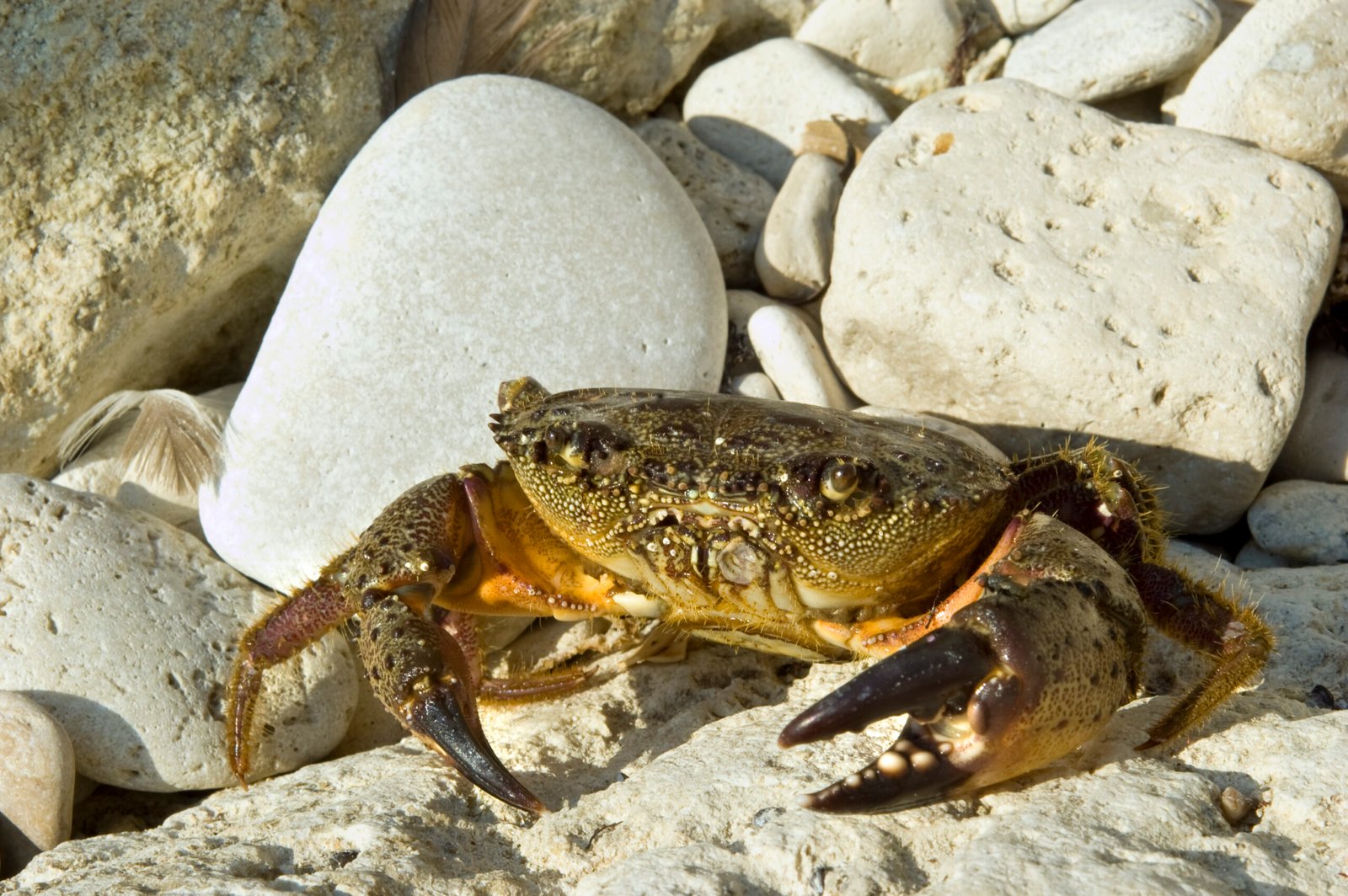
Nota: las fotografías de esta galería son ilustrativas. La identificación precisa de una especie requiere observar características anatómicas específicas y, en algunos casos, la revisión de un especialista.
Note: photographs in this gallery are illustrative. Accurate species identification requires examination of specific anatomical features and, in some cases, expert review.
Fuentes consultadas
- Journal of Crustacean Biology, 2026 — estudio sobre Mithraculus sculptus y Mithraculus coryphe en el sur del Caribe mexicano.
- Healthy Reefs Initiative — proyectos relacionados con el cangrejo rey del Caribe y restauración arrecifal.
- Smithsonian Ocean — ecología de pastos marinos.
- Guía de fauna intermareal de Punta Piedra, Mahahual — registros de crustáceos costeros.
Sources consulted
- Journal of Crustacean Biology, 2026 — study of Mithraculus sculptus and Mithraculus coryphe in the southern Mexican Caribbean.
- Healthy Reefs Initiative — Caribbean king crab and reef restoration projects.
- Smithsonian Ocean — seagrass ecology.
- Punta Piedra, Mahahual intertidal wildlife guide — observations of coastal crustaceans.